

Oncode Accelerator Pulse - Autumn 2026
The Netherlands has an internationally strong reputation in oncology research – but scientific excellence alone does not guarantee that new discoveries reach patients. We have an opportunity, and a responsibility, to turn more of this research into applications, technologies, and cancer treatments.
To the collection
Bertholt Leeftink on Powering Oncology Progress
The Netherlands has an internationally strong reputation in oncology research – but scientific excellence alone does not guarantee that new discoveries reach patients. I believe that we have an opportunity, and a responsibility, to turn more of this research into applications, technologies, and cancer treatments.
That challenge is becoming more urgent as our population ages and healthcare costs increase. At the same time, it is an exciting moment for oncology innovation.
At Oncode Accelerator, we build innovations in patient cohorts, organoids, and artificial intelligence (AI). We also apply these innovations to the development of four types of cancer therapies, represented by our Workstreams: Small Molecules, Biologics, Cell and Gene Therapy, and Therapeutic Vaccines. By developing and combining these technologies, we can help promising science move more quickly and effectively towards patients.
To support this ambition, we have implemented several changes at Oncode Accelerator. For example, we expanded the scope of the Demonstrator Projects that we can support to include early clinical studies and projects that use only one of our workstreams or platforms. We will also start to offer more generous project funding conditions and intellectual property arrangements. Alongside this, we have greatly simplified our program’s governance structure. Altogether, these actions should help us support drug developers better, apply our resources more efficiently, and ultimately accelerate the delivery of new therapies to patients.
Still, as Oncode Accelerator grows and evolves, our ambition remains the same. We will work with partners across the oncology ecosystem to give excellent oncology research the infrastructure, expertise, and funding it needs to truly impact patients.
That is what Powering Oncology Progress, the theme of this edition of the Oncode Accelerator Pulse, means to us: connecting strengths across the oncology ecosystem to ultimately benefit patients.
You can see that principle in action throughout this edition of the Pulse.
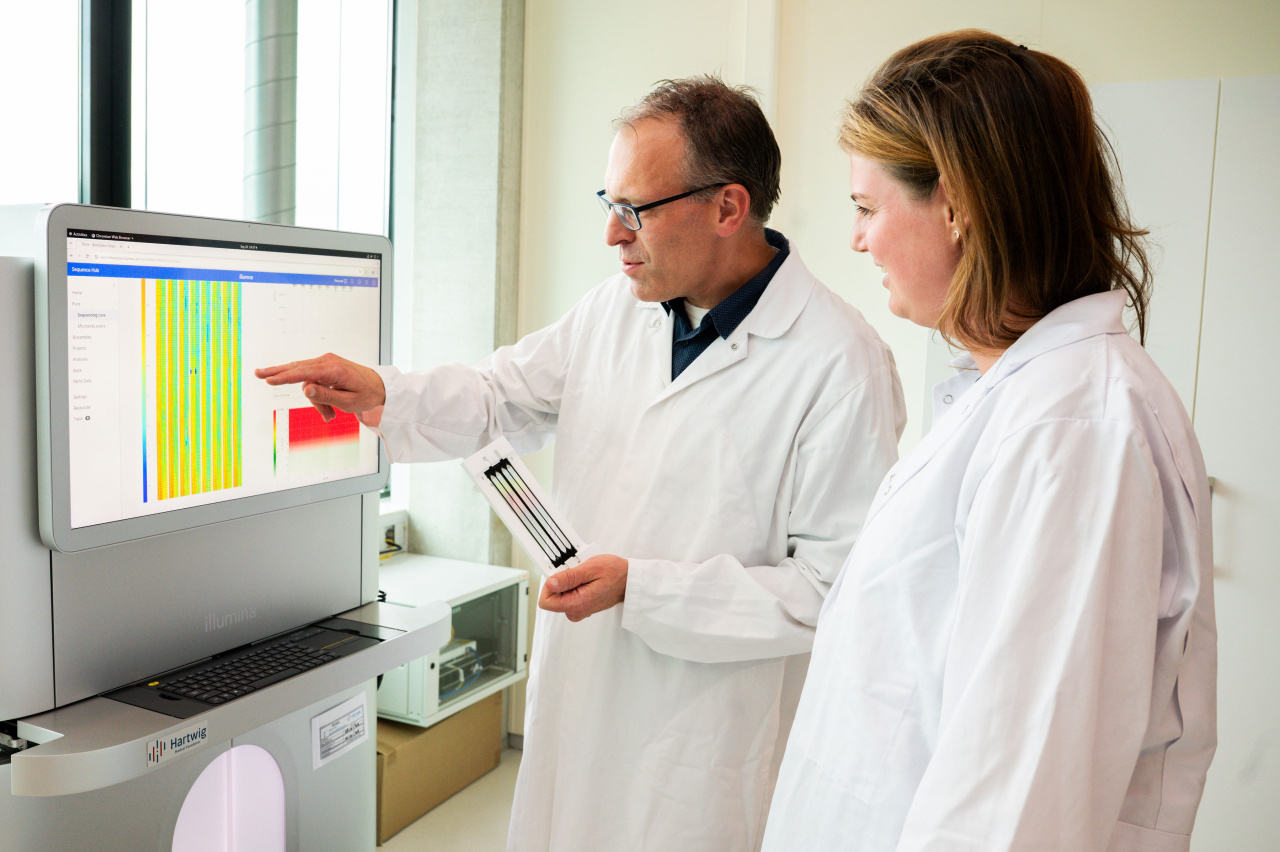
We start this edition with a look at how our Patient Cohorts Platform works with Hartwig Medical Foundation to create a “learning healthcare system,” in which data from routine patient care feeds into research and development, and in turn produces new therapies and improves care for future patients. This story shows why it is important to build strong links between patient care in hospitals and research in the lab.
To illustrate the power of innovative technologies, we share the story of how Oncode Accelerator-supported researchers at the Netherlands Cancer Institute developed AlphaBridge, which makes structural biology more accessible to drug developers. Our ExpediteBio Partner Spotlight highlights the value of sharing expertise, explaining how bringing in late-stage drug development know-how early can de-risk the drug development process.
All this does not happen for free. However, in the early stages of development, risks are high and funding is scarce. To try to bridge this funding gap, Oncode Accelerator Foundation and Oncode Institute launched the Oncode Impact Foundation. In the Pulse, you can read about how it uses philanthropy to fund the development of new treatment options for cancer patients.
Ultimately, this progress must be meaningful for patients. Our interview with Leron Kok, a PhD student at the Princess Máxima Center for pediatric oncology and former cancer patient, brings a unique patient perspective to research and innovation. Finally, our report from the Discovery Network Meeting on Predictable Treatments tackles a key question for drug development: how can we better predict which treatments will work, and for whom?
Together, these stories paint a picture of the oncology ecosystem that we are building: one where scientific excellence, advanced technologies, patient insights, and development expertise come together to power oncology progress.
That is how we power oncology progress.
-
A Learning Healthcare System for Better Cancer Research and Care
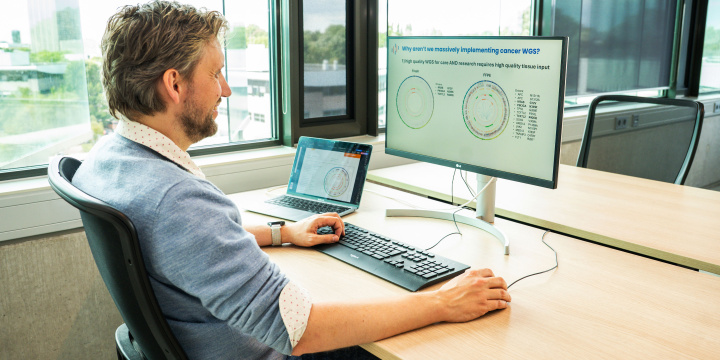
Vast amounts of data are generated during cancer diagnosis and treatment every single day. The insights this data provides are valuable for individual patients, but also has potential to drive research and innovation to improve care for future patients. Improving this ‘data loop’ is a shared mission for Hartwig Medical Foundation and the Oncode Accelerator Patient Cohorts Platform. -
Lowering Barriers in Structural Biology: How AlphaBridge Helps Reveal Cancer Biology
To bridge complex AI outputs and the everyday questions of cancer researchers, Oncode Accelerator-supported researchers at the Netherlands Cancer Institute developed AlphaBridge, a web-based platform designed to make AI-enabled structural biology more accessible. -
From Candidate to Clinic: ExpediteBio’s Integrated Biologics Pipeline
Are you a drug developer looking to overcome the gap between early antibody development and clinical manufacturing? Read this article to learn more about ExpediteBio: a company that helps drug developers select candidates that have the desired biological properties and a realistic, efficient path towards clinical manufacturing, and provides the necessary infrastructure to bring them towards the clinic.
-

Oncode Impact Foundation: Bridging the Funding Gap
The Oncode Impact Foundation, a joint initiative of the Oncode Accelerator Foundation and Oncode Institute, launched in July 2026. It uses philanthropy to fund the development of new treatment options for cancer patients through the so-called ‘valley of death’: the crucial phase in which promising scientific breakthroughs often falter and fail to reach patients. -

How a Pediatric Cancer Survivor Is Helping to Create a New Field of Cancer Research
At 13, Leron Kok was diagnosed with leukemia. He spent two years in hospital during high school and received a stem cell transplant. Today, he is a PhD student at the Princess Máxima Center for pediatric oncology. Leron is co-first author of a recent Nature paper that gives a name to a long-overlooked class of small proteins that can be important in cancer: peptideins. -
Treating Patients, Not Populations: Key Priorities for Improving the Predictability of Cancer Treatment
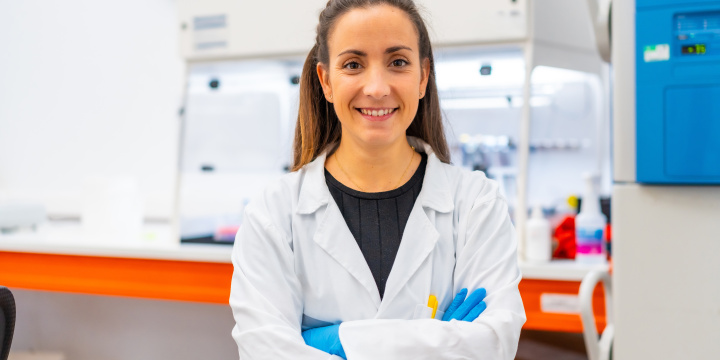
At the Discovery Network meeting on Predictability of Cancer Treatments in September 2026, a group of international clinician-scientists, scientific experts, and patient advocates met to discuss how to improve cancer care and the development of new cancer therapies. They outlined fundamental challenges in oncology that must be addressed to improve the lives of patients.
Would you like to learn more about Oncode Accelerator, and how we can work together to Power Oncology Progress?
You are invited to join us at the 2026 Oncode Accelerator Summit on 3 December!
Photo credit A Learning Healthcare System for Better Cancer Research and Care, How a Pediatric Cancer Survivor Is Helping to Create a New Field of Cancer Research, and Oncode Impact Foundation: Laloes Fotographie
Subscribe to stay connected
Subscribe to our newsletter for more stories like these!