

News
Lowering Barriers in Structural Biology: How AlphaBridge Helps Reveal Cancer Biology
Advances in AI like the Nobel Prize-winning AlphaFold platform are rapidly transforming structural biology, a field that seeks to understand how proteins are shaped and how they interact with other molecules in the cell. These interactions are fundamental to cancer biology and drug discovery, since most therapies work by targeting specific sites on proteins. To bridge complex AI outputs and the everyday questions of cancer researchers, Oncode Accelerator-supported researchers at the Netherlands Cancer Institute developed AlphaBridge, a web-based platform designed to make AI-enabled structural biology more accessible. Published in Structure this week, AlphaBridge is already used by thousands of researchers worldwide.
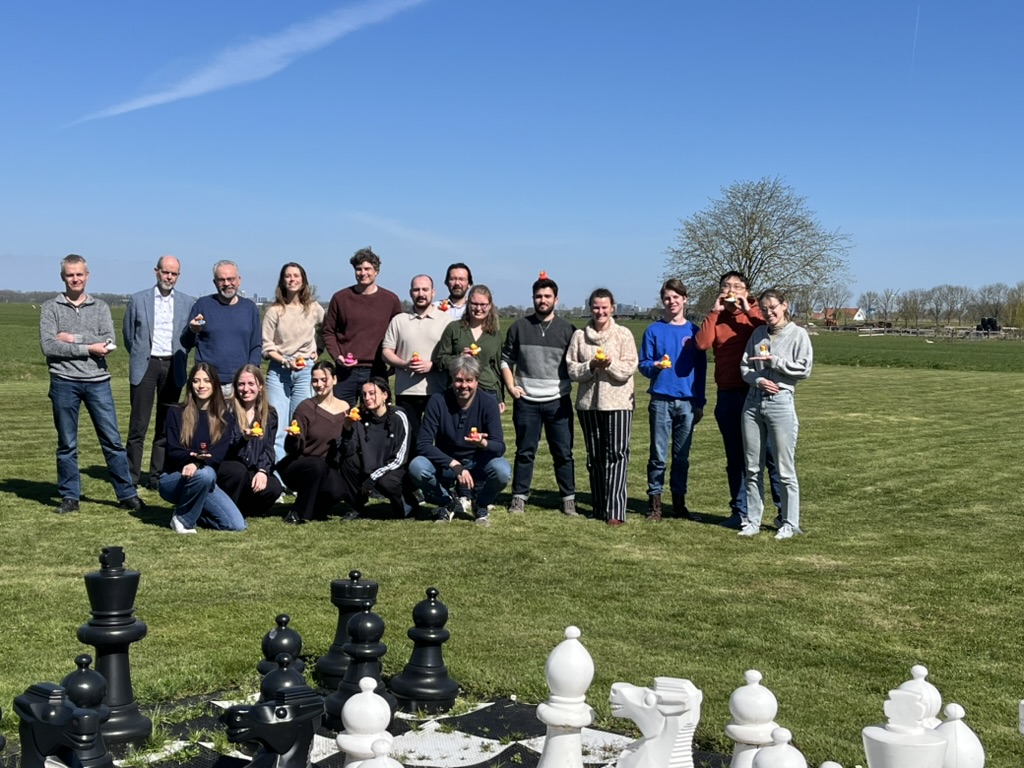
The group of Anastassis (Tassos) Perrakis at the NKI focuses structural biology: the study of proteins, the tiny molecular ‘machines’ in our cells, look and interact with other proteins, DNA, or other biological molecules. Understanding these interactions is crucial for uncovering disease mechanisms and designing better medicines: if scientists can understand what proteins involved in cancer look like in detail, this can help to precisely design drugs to target those proteins.
Daniel Alvarez entered the field of structural biology just as AI tools were becoming widely available. As a PhD student funded through the Oncode Accelerator AI platform, his research naturally seeks to apply his background in bioinformatics and computer science to questions in cancer biology. “Artificial intelligence and the study of molecular interactions intertwine very well. Algorithms that predict the structure of proteins can help us to guess at how those proteins look and what they might interact with.”

Daniel Alvarez, PhD Student in the Perrakis LabArtificial intelligence and the study of molecular interactions intertwine very well. Algorithms that predict the structure of proteins can help us to guess at how those proteins look and what they might interact with.
Bridging AI and Biology
Daniel is part of a new generation of cancer researchers that bring AI and biology together, driven by curiosity and a desire to overcome the limitations of existing tools.
The rise of tools like AlphaFold, the most popular of the AI-driven systems for predicting protein structures and part of the work for which the 2024 Nobel Prize in Chemistry was awarded, dramatically changed the field. Suddenly it was possible to fast-track research by using AI to predict protein structures – saving hands-on work in the lab. Predicting a protein’s structure was no longer the bottleneck for structural biologists. Interpreting AI-driven predictions and understanding how proteins interact with other biomolecules became the next hurdle, since specialized computational know-how was needed to make sense of the outputs.
"Predicting protein structure was amazing," Perrakis explains. "But a second revolution started when we could predict the structures of molecules together: proteins with DNA, RNA, drugs, lipids, sugars, and of course with other proteins. You could take a few molecules you suspected might form a complex, and AlphaFold would predict the structure. Just as importantly, the prediction told you whether those molecules were likely to interact at all. But you needed a really good grasp of the output to know what was reliable and what wasn't."
Anastassis (Tassos) Perrakis, Research Group Leader at The Netherlands Cancer Institute (NKI) and Oncode InstitutePredicting protein structure was amazing. But a second revolution started when we could predict the structures of molecules together: proteins with DNA, RNA, drugs, lipids, sugars, and of course with other proteins.
Daniel continues: "At some point, Ren Xie and I — the two 'AI experts' in the group — became the people who ran the AlphaFold predictions and interpreted them: first within the group, then for the department, then for the NKI, and even quite a few external collaborators. It was very fun at the start, but lots of manual work, and I thought it should be possible to automate it and make it easier: to bring structural biology to scientists who don't have expertise in it."
That frustration sparked the idea for AlphaBridge.

From AlphaFold to AlphaBridge
What began as a frustration with manual work has now enabled thousands of researchers to explore cancer-relevant protein interactions.
It was a collaborative effort that made use of the range of expertise within the Perrakis lab. First, Daniel, together with his fellow PhD student Razvan Borza, put together some ideas for how to analyze and present the AlphaFold output better for non-experts, and then turned the ideas into code. Maarten Hekkelman, a Senior Post-doctoral Fellow in the Perrakis group, already had experience in building web tools for making AI for protein structure prediction easier for everyone, having worked on a previous project from the lab called AlphaFill. Daniel built on that experience to bring forward AlphaBridge as a web-based platform designed for accessibility and immediate usability.
Using AlphaFold outputs as input, AlphaBridge now allows researchers to validate and explore predicted protein structure assemblies and assess how likely those proteins are to interact with each other or other biomolecules. Daniel’s colleague Michael Uckelmann, a post-doctoral researcher in the Perrakis lab who used AlphaBridge a lot for his own research, explains: “As a researcher using AlphaBridge, it provides a very simple process to see predicted protein structures, and their protein-protein or protein-DNA interactions. It’s a very well-built and genuinely useful tool.”
Michael Uckelmann, Post-Doctoral Researcher in the Perrakis LabAs a researcher using AlphaBridge, it provides a very simple process to see predicted protein structures, and their protein-protein or protein-DNA interactions. It’s a very well-built and genuinely useful tool.
How does AlphaBridge work?
Daniel explains: “AI algorithms don’t only provide you with a predicted protein structure. They also provide confidence metrics: numbers that tell you how confident you can be in the model’s prediction. There is always some room for error, and AI models can hallucinate, so it’s important to have this information on how likely the prediction is to be correct.”
By systematically analyzing and ranking predictions based on these confidence metrics, AlphaBridge enables researchers to pinpoint the most plausible interactions. This makes large-scale, s0-called in silico screening possible even for scientists without a background in structural biology.
Developing AlphaBridge came with challenges. Daniel laughs when asked about them: “Well, our website is very colorful. We use lots of different colors to clearly show which proteins are interacting or not. But I am color blind!” Nevertheless, the team succeeded in designing an attractive tool that uses color to simplify complexity for users.
Developing a tool in such a fast-moving field was also a challenge: “We started building AlphaBridge while AlphaFold was also still being further developed, so a lot of AlphaFold’s documentation and code wasn’t available at the time. So, building AlphaBridge was not straightforward. We built it iteratively, like an experiment,” explains Daniel.
Into the Future with AlphaBridge
AlphaBridge is now used by scientists around the world. Since its first release at the end of 2024, it has attracted over 2000 unique users every month – a clear sign of its value to the research community.
Looking forward, the team at the Perrakis lab is continuing to expand and improve upon the platform. One priority is reducing its reliance on proprietary AI models. “We are exploring other AlphaFold-like models to see if we can get similar results and accuracy with open-source versions,” Daniel explains. His colleagues are also already using the AlphaBridge platform to start solving a major challenge in oncology: understanding how proteins assemble into complexes that influence tumor development and therapy response. Michael Uckelmann is leading this effort.
Already, by helping scientists to discover new protein interactions and complexes, AlphaBridge can open new therapeutic avenues. It’s fundamental research with great potential impact: creating possibilities for drug developers to better understand and target previously “undruggable” proteins, and laying a strong foundation for future cancer therapy development.
References
- AlphaBridge: https://doi.org/10.1016/j.str.2026.08.011
- AlphaFill: https://doi.org/10.1038/s41592-022-01685-y
AI-related tools from the Perrakis lab:
About the Netherlands Cancer Institute
The Netherlands Cancer Institute, founded in 1913, is among the top 10 comprehensive cancer centers, combining world-class fundamental, translational, and clinical research with dedicated patient care. This combination ensures rapid translation of basic research into clinical applications: today’s research for tomorrow’s cure. Their initiatives to promote excellent translational research have been recognized by the European Academy of Cancer Sciences, when they designated the Netherlands Cancer Institute as ‘Comprehensive Cancer Center of Excellence in Translational Research’.
Website: https://www.nki.nl/
Did you like this article? Subscribe to our newsletter for more like this.
Ontwikkelingen die gebruikmaken van kunstmatige intelligentie (AI) zoals het met de Nobelprijs bekroonde AlphaFold-platform, veranderen de structurele biologie in hoog tempo, een vakgebied dat onderzoekt wat de structuur van eiwitten is en hoe zij binden aan andere moleculen in de cel. De interactie tussen eiwitten en moleculen is fundamenteel voor onderzoek naar kanker en geneesmiddelenontwikkeling, aangezien de meeste therapieën zich richten op specifieke bindingsplekken op eiwitten. Om de kloof te overbruggen tussen complexe AI-uitkomsten en dagelijkse onderzoeksvragen rondom kanker, ontwikkelden door Oncode Accelerator ondersteunde wetenschappers van het Nederlands Kanker Instituut (NKI) AlphaBridge: een online platform dat AI-gedreven structurele biologie toegankelijker maakt. AlphaBridge, waarover een publicatie deze week verschijnt in het wetenschappelijke vakblad Structure, wordt nu al gebruikt door duizenden onderzoekers wereldwijd.
De groep van Anastassis (Tassos) Perrakis bij het NKI richt zich op structurele biologie: de studie van hoe eiwitten — de kleine moleculaire ‘machientjes’ in onze cellen — eruitzien en interacties aangaan met andere eiwitten, DNA, of overige biologische moleculen. Inzicht in deze interacties is cruciaal om ziektemechanismen bloot te leggen en betere medicijnen te ontwerpen: als wetenschappers precies weten hoe eiwitten die betrokken zijn bij kanker eruitzien, kan dat helpen om medicijnen nauwkeurig op die eiwitten te richten.
Daniel betrad het vakgebied van de structurele biologie precies op het moment dat AI-tools breed beschikbaar werden. Als promovendus, gefinancierd via het Oncode Accelerator AI Platform, sluit zijn onderzoek naadloos aan bij zijn achtergrond in de bio-informatica. Die expertise zet hij in voor vraagstukken binnen het kankeronderzoek. "Kunstmatige intelligentie en de studie van moleculaire interacties passen heel goed bij elkaar. Algoritmes die de structuur van eiwitten voorspellen, kunnen ons helpen te achterhalen hoe die eiwitten eruitzien en met welke moleculen ze zich kunnen binden."
Daniel Alvarez, PhD Student in the Perrakis LabArtificial intelligence and the study of molecular interactions intertwine very well. Algorithms that predict the structure of proteins can help us to guess at how those proteins look and what they might interact with.
AI en structurele biologie samenbrengen
Daniel maakt deel uit van een nieuwe generatie kankeronderzoekers die AI en biologie samenbrengen, gedreven door nieuwsgierigheid en de wens om de beperkingen van bestaande tools te overwinnen.
De opkomst van tools als AlphaFold — het populairste van de AI-gedreven systemen voor het voorspellen van eiwitstructuren, en onderdeel van het werk waarvoor in 2024 de Nobelprijs voor scheikunde werd toegekend — veranderde het vakgebied ingrijpend. Plotseling was het mogelijk om onderzoek te versnellen door eiwitstructuren te voorspellen met AI, wat handmatig laboratoriumwerk bespaarde. Het voorspellen van de structuur van een eiwit was nu niet langer het knelpunt voor structureel biologen. Het interpreteren van AI-voorspellingen en het begrijpen hoe eiwitten interacties aangaan met andere biomoleculen werd de volgende hindernis, omdat daarvoor specialistische computationele kennis nodig was.
"Het voorspellen van eiwitstructuren is fantastisch," legt Perrakis uit. "Maar er kwam een tweede revolutie toen we de structuren van moleculen in combinatie konden voorspellen: eiwitten met DNA, RNA, medicijnen, lipiden, suikers en natuurlijk met andere eiwitten. Je kon een paar moleculen nemen waarvan je vermoedde dat ze een complex zouden vormen, en AlphaFold voorspelde de structuur. En minstens zo belangrijk: de voorspelling vertelde je of die moleculen überhaupt waarschijnlijk met elkaar zouden reageren. Maar je moet de output wel goed begrijpen om te weten welke voorspellingen betrouwbaar zijn en welke niet. "Daniel vervolgt: "Op een gegeven moment werden Ren Xie en ik — de twee 'AI-experts' binnen de groep — degenen die de AlphaFold-voorspellingen draaiden en interpreteerden: eerst binnen de groep, toen voor de afdeling, toen voor het hele NKI, en zelfs voor best wat externe samenwerkingspartners. In het begin was het erg leuk, maar het was ook veel handmatig werk, en ik bedacht dat het mogelijk moest zijn om dit makkelijker te maken en te automatiseren: om zodoende structurele biologie toegankelijk te maken voor wetenschappers zonder expertise daarin."
Deze gedachte was de vonk voor het idee achter AlphaBridge.
Van AlphaFold naar AlphaBridge
Wat begon als frustratie over handmatig werk, heeft inmiddels duizenden onderzoekers in staat gesteld om relevante eiwitinteracties in onderzoek naar kanker te verkennen.
AlphaBridge is de uitkomst van een gezamenlijke inspanning waarbij gebruik werd gemaakt van de brede expertise binnen het lab van Perrakis. Eerst bedachten Daniel en zijn medepromovendus Razvan Borza ideeën om de AlphaFold-output beter te analyseren en te presenteren aan niet-experts, om die ideeën vervolgens om te zetten in code. Maarten Hekkelman, senior postdoctoraal onderzoeker in de groep van Perrakis, had al ervaring met het bouwen van online AI-tools waarmee eiwitstructuurvoorspelling voor iedereen toegankelijker kan worden gemaakt, dankzij zijn werk aan een eerder project van het lab genaamd AlphaFill. Daniel maakte graag gebruik van die ervaring om AlphaBridge te ontwikkelen als online platform, met oog op toegankelijkheid en direct gebruiksgemak.
Met AlphaFold-output als input stelt AlphaBridge onderzoekers nu in staat om voorspelde eiwitstructuur-complexen te valideren en te verkennen, en in te schatten hoe waarschijnlijk het is dat eiwitten met elkaar of met andere moleculen interacties aangaan. Daniel’s collega Michael Uckelmann, postdoctoraal onderzoeker in het lab van Perrakis die AlphaBridge veel gebruikte voor zijn eigen onderzoek, legt uit: "Als onderzoeker die AlphaBridge gebruikt, biedt het een heel eenvoudig proces om voorspelde eiwitstructuren en hun eiwit-eiwit- of eiwit-DNA-interacties te bekijken. Het is een heel goed gebouwde en oprecht nuttige tool."
Hoe werkt AlphaBridge?
Daniel legt uit: "AI-algoritmes geven je niet alleen een voorspelde eiwitstructuur. Ze leveren ook statistieken rondom betrouwbaarheid: cijfers die aangeven hoeveel vertrouwen je in de voorspelling van het model kunt hebben. Er is altijd ruimte voor fouten, en AI-modellen kunnen hallucineren, dus het is belangrijk om te weten hoe waarschijnlijk het is dat een voorspelling klopt."
Door voorspellingen systematisch te analyseren en te rangschikken op basis van deze statistieken, stelt AlphaBridge onderzoekers in staat om de meest plausibele interacties eruit te pikken. Dit maakt grootschalige, zogeheten in silico screening mogelijk, zelfs voor wetenschappers zonder achtergrond in structurele biologie.
De ontwikkeling van AlphaBridge kende ook uitdagingen. Daniel lacht als hem daarnaar gevraagd wordt: "Onze website is heel kleurrijk. We gebruiken veel verschillende kleuren om duidelijk te laten zien welke eiwitten wel of niet binden. Maar ik ben kleurenblind!" Toch is het team erin geslaagd een aantrekkelijke tool te ontwerpen die kleur gebruikt om complexiteit voor gebruikers te vereenvoudigen.
Het ontwikkelen van een tool in een snel veranderend vakgebied als AI was ook een uitdaging: "We begonnen met het bouwen van AlphaBridge terwijl AlphaFold zelf ook nog volop in ontwikkeling was, waardoor veel van de documentatie en code van AlphaFold destijds nog niet beschikbaar was. Het bouwen van AlphaBridge verliep dus niet vanzelfsprekend. We hebben het iteratief opgebouwd, als een experiment," legt Daniel uit.
De toekomst van AlphaBridge
AlphaBridge wordt inmiddels wereldwijd door wetenschappers gebruikt. Sinds de eerste release eind 2024 telt het platform maandelijks meer dan 2.000 unieke gebruikers, een duidelijk teken van de waarde die het biedt aan de gemeenschap van kankeronderzoekers.
Vooruitkijkend blijft het team van het Perrakis-lab het platform uitbreiden en verbeteren. Een van de prioriteiten is het verminderen van de afhankelijkheid van commercieel eigendom zijnde AI-modellen. "We onderzoeken andere AlphaFold-achtige modellen om te kijken of we vergelijkbare resultaten en nauwkeurigheid kunnen behalen met open-sourcevarianten," legt Daniel uit. Daniels collega's gebruiken AlphaBridge inmiddels ook om een grote uitdaging binnen het kankeronderzoek aan te pakken: begrijpen hoe eiwitten zich organiseren in complexen die de ontwikkeling van tumoren en de effectiviteit van therapieën beïnvloeden. Michael Uckelmann leidt dit initiatief.
Door wetenschappers te helpen nieuwe eiwitinteracties en -complexen te ontdekken, kan AlphaBridge nu al nieuwe therapeutische mogelijkheden ontsluiten. Het is fundamenteel onderzoek met potentieel grote impact: het maakt eerder "onbehandelbare" biologische processen toegankelijker en legt een stevige basis voor de toekomstige ontwikkeling van kankertherapieën.
Referenties
- AlphaBridge: https://doi.org/10.1016/j.str.2026.08.011
- AlphaFill: https://doi.org/10.1038/s41592-022-01685-y
AI-gerelateerde tools uit het Perrakis-lab:
Over het Nederlands Kanker Instituut
Het Nederlands Kanker Instituut (NKI), opgericht in 1913, behoort tot de top 10 van alomvattende kankercentra en combineert fundamenteel, translationeel en klinisch onderzoek van wereldklasse met toegewijde patiëntenzorg. Deze combinatie zorgt voor een snelle vertaling van fundamenteel onderzoek naar klinische toepassingen: het onderzoek van vandaag voor de behandeling van morgen. De initiatieven van het NKI om excellent translationeel onderzoek te bevorderen zijn erkend door de European Academy of Cancer Sciences, die het Nederlands Kanker Instituut heeft aangewezen als 'Comprehensive Cancer Center of Excellence in Translational Research'.
Website: https://www.nki.nl/