

News
How a Pediatric Cancer Survivor Is Helping to Create a New Field of Cancer Research
At 13, Leron Kok was diagnosed with leukemia. He spent two years in hospital during high school and received a stem cell transplant. Today, he is a PhD student at the Princess Máxima Center for pediatric oncology. Leron is co-first author of a recent Nature paper that gives a name to a long-overlooked class of small proteins that can be important in cancer: peptideins. In this Patient Perspective article, Leron shares what the discovery means for cancer research, what it was like to be involved in the large consortium behind the paper on peptideins, and what this work means to him.
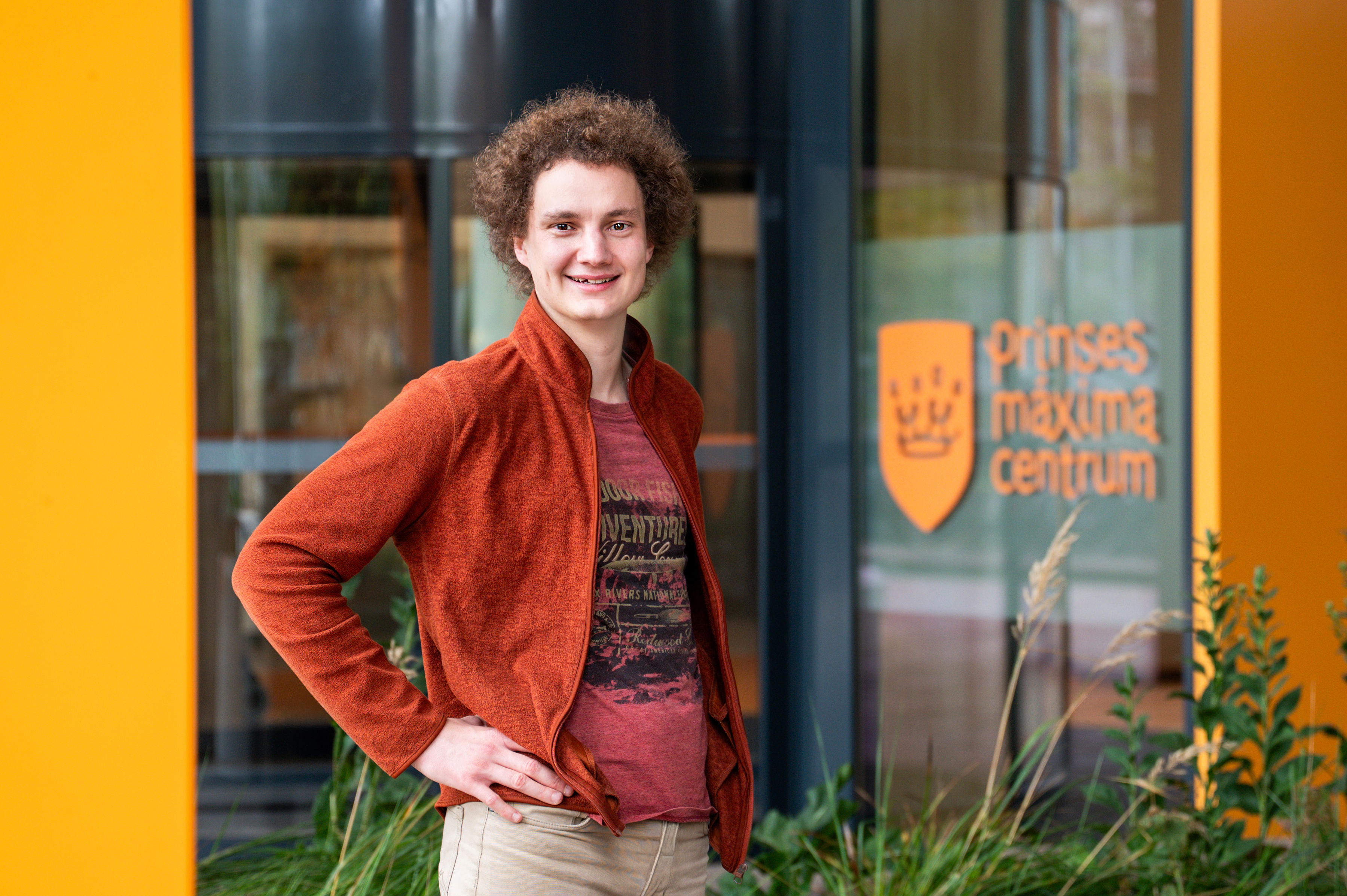
A large part of our genome used to be written off as simply noise. Many stretches of DNA that do not match the textbook definition of a gene were assumed not to produce anything of importance.
In recent years, researchers like Sebastiaan van Heesch – Research Group Leader at the Princess Máxima Center for pediatric oncology, co-lead of Oncode Accelerator’s Therapeutic Vaccines Workstream, and Junior Oncode Investigator at Oncode Institute – have shown that these DNA stretches can produce small proteins, collectively known as the “dark proteome”. Excitingly, some of those small proteins have important biological roles, including in cancer. Some could even become new targets for cancer therapies. The work of Leron Kok, a PhD student in Sebastiaan’s research group, is helping to bring this dark proteome to light.
Leron’s path towards this research started long before his first day in the lab. As a teenager, he was a cancer patient himself.
“I was 13 when I was diagnosed with Acute Promyelocytic Leukemia, so I was old enough to understand a lot of what was happening to me,” Leron says. “For example, if I had an echocardiogram of my heart, then I wanted to know more about the heart and the aorta. Maybe it was also a way of coping with everything, to understand it. I think that may have stayed with me: wanting to know how everything works.”
A New Name for a New Research Field
Although the proteins that make up the dark proteome were overlooked for decades, there were a few research groups that started to study them over the last decade. Armed with new technologies that allowed them to find proteins that older methods couldn’t detect, dark proteome pioneers like Sebastiaan, Leron, and their fellow members of the international TransCODE consortium discovered thousands of these small proteins.
Still, many questions about the dark proteome remained. To further complicate things, the dark proteome was missing from major protein databases that are used by many researchers. Leron explains why this is important: “This means that research groups would have to specifically search for small proteins from the dark proteome to take them into account. Any lab not specifically studying the dark proteome would not take those small proteins along in their screens.”
The result: the dark proteome could continue to be overlooked by most scientists. The recent Nature publication changes that.
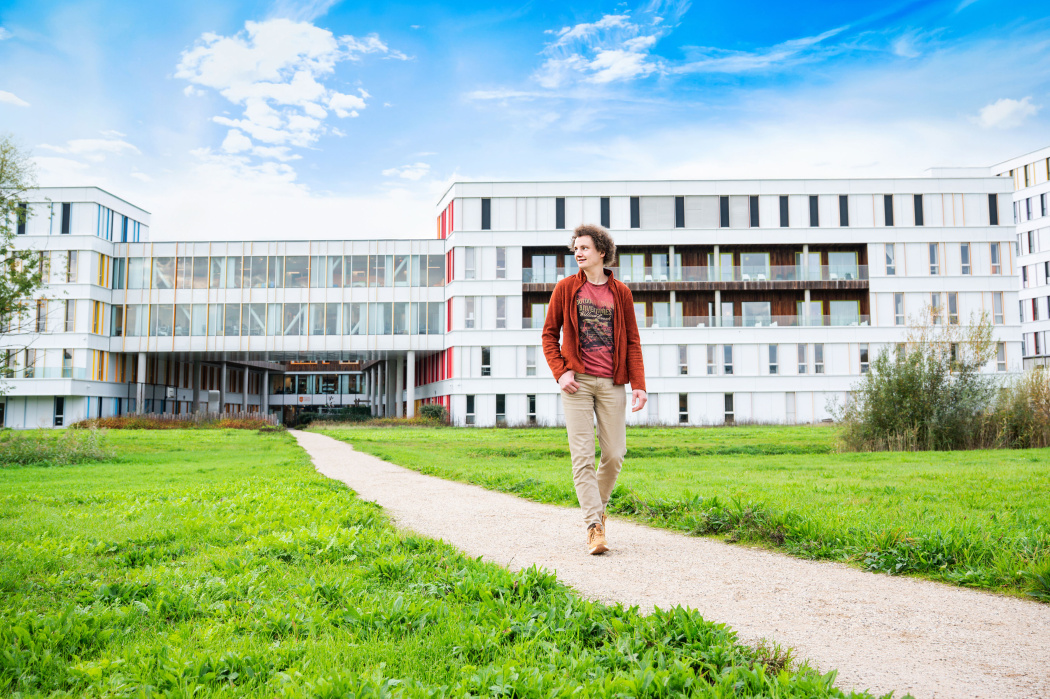
Leron explains, “By giving peptideins a name, it becomes easier to study them and communicate about them. It also creates a way to accumulate data – instead of having discordant groups publishing about them under different names. Giving them one name can accelerate the research.” The clear definition also allowed peptideins to be categorized in scientific databases, making them findable by other researchers.
Kick-starting this new age of cataloging peptideins, the TransCODE team also publicly shared over 1700 new peptideins that they detected. These are now published in a range of major protein databases. “It was the plan from the start to make the findings public,” says Leron. “We can find much more if the data are out in the open, and more people are studying it. There is still so much research to do on the dark proteome that no single group could do it alone.”
The co-authors also performed laboratory tests to prove that some of the peptideins they found have important functions. One turned out to be key for the survival of cancer cells. “They are not just junk, like people used to think,” Leron says. “Peptideins can really have a function.”
Because many peptideins appear on the cell surface, and can regulate processes in cancer cells, they could help scientists develop new cancer treatments, such as immunotherapy. “Peptideins are not directly a new treatment for cancer,” cautions Leron. Rather, they are a clue towards new therapies that scientists can now investigate more systematically.
Leron Kok, PhD student in the Van Heesch GroupBy giving peptideins a name, it becomes easier to study them and communicate about them. It also creates a way to accumulate data – instead of having discordant groups publishing about them under different names. Giving them one name can accelerate the research
Working in an International Collaboration
Leron joined the dark proteome project as a bioinformatician. It was his first job, and only three months after he completed his master’s degree. He jumped directly into the TransCODE consortium, an international collaboration of more than 60 researchers from over 30 institutions worldwide. “Suddenly I was in these meetings with group leaders from around the world, and doing bioinformatic analyses for them,” he reflects. “At first, I sometimes felt like, what could I contribute to this field when there were all these experts involved already?”
Leron persevered, deepened his role in the project, and started a PhD trajectory focused on the dark proteome. He analyzed a large amount of so-called immunopeptidomics data, and in doing so came to know that data better than anyone else.
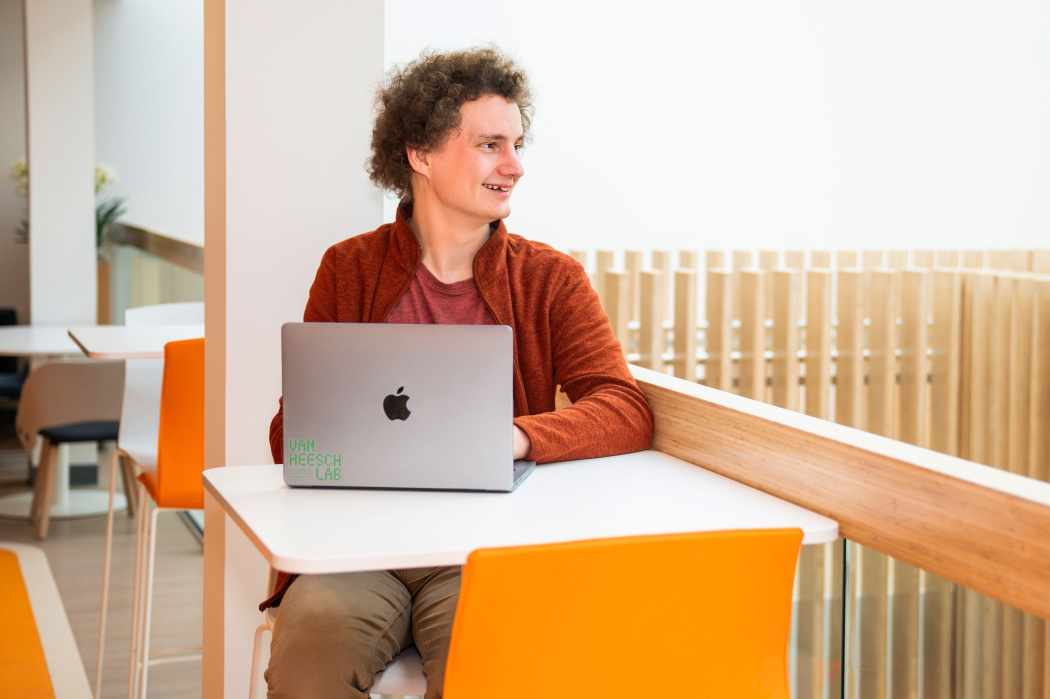
With that expertise came responsibility. “When you work so much with the data, you become the person who knows it best, and you can find new things. You have to make sure it’s correct and robust, and that you explain it well. It was rewarding to see that I learned to communicate well with all the group leaders, and that they took my input seriously.”
The broad collaboration was also essential for the scientific goals of the paper. Leron explains, “Introducing peptideins as a concept would not have been possible without having so many experts on board. Otherwise, it would have just been a paper saying, ‘Hey, we can call these things peptideins.’ You need consensus.”
The collaborative work has already proved to be exciting for the broader scientific community. Within academia, researchers are continuing to investigate the potential roles of the dark proteome and peptideins in cancer, and new academic projects and collaborations like the Cancer Grand Challenge ILLUMINE have already begun. Scientists from industry are also taking note, with a range of biotechnology start-up companiesexploring the dark proteome to find new drug targets.
Leron Kok, PhD student in the Van Heesch GroupIntroducing peptideins as a concept would not have been possible without having so many experts on board. Otherwise, it would have just been a paper saying, ‘Hey, we can call these things peptideins.’ You need consensus.
The Princess Máxima Center: Where the Work Happened
Leron’s first introduction to the Princess Máxima Center was during the final internship of his master’s program. From that experience, he already knew that he wanted to return.
One part of the draw was the atmosphere. Leron describes how the Máxima Center was built with patients and parents in mind. For instance, the hospital offers rooms where parents can sleep close to their child, but in a separate bed, and activities designed especially for adolescents – the age group he belonged to when he was treated for cancer.
Leron was also drawn to the chance to contribute to pediatric oncology research. “I remember listening to an external speaker from the US who worked on the subtype of leukemia that I had, and how standard treatment had changed since then,” he says. “That stuck with me.”
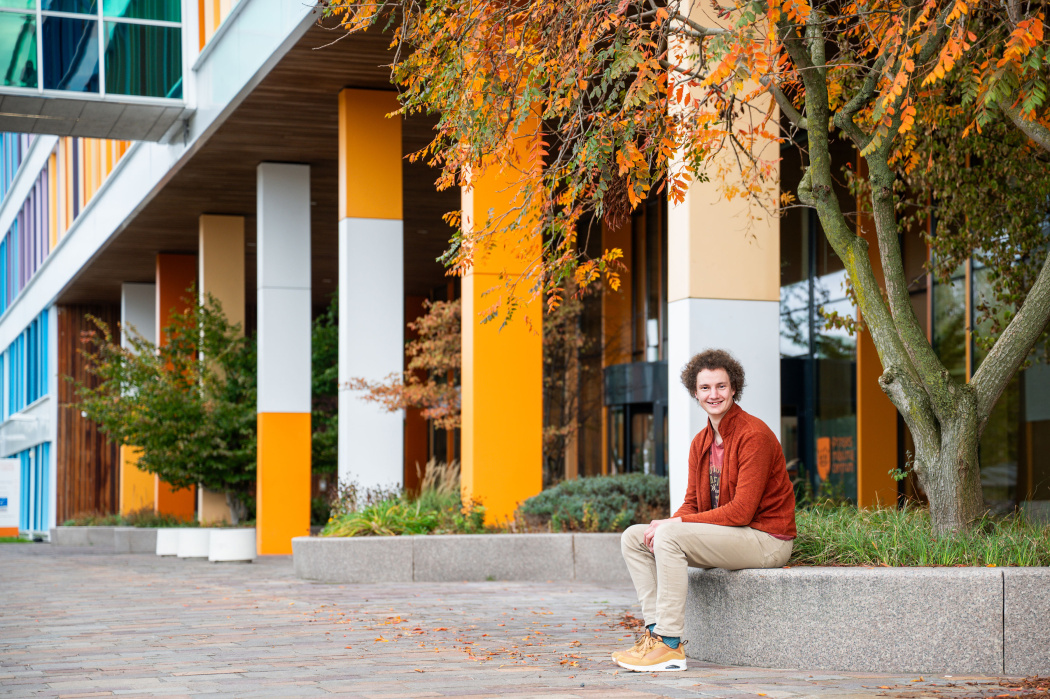
When asked what he would say to patients reading this article, Leron says thoughtfully, “Patients are such a diverse group, and I don’t think any advice applies to all of them. But one thing that I valued a lot were the opportunities I had through organizations like the Make-A-Wish Foundation and Stichting Kinderoncologische Vakantiekampen. I could go to Disney, I went skiing, I went on an outdoor weekend in Belgium. At the time, I sometimes wondered, isn’t this too much? Am I not claiming too much? Because, of course, it’s all possible because people donate. But later, I appreciated that these experiences enabled me to make memories and have cool stories that were different from: I was in hospital for two years during high school. And there weren’t that many opportunities to have some of the normal experiences other people were having. In hindsight, I think these activities also helped me to cope with all the treatments. They provided some distraction from these treatments and all the uncertainties. So, I would say, take those opportunities.”
Leron Kok, PhD student in the Van Heesch GroupSometimes I have these moments, like these interviews, or when I’m walking around the Máxima, where I think, oh yeah, this is about patients, and I have been that patient myself. It’s about working towards new treatments like the ones that enabled me to survive.
Meaningful Research: Peptideins and Beyond
As a bioinformatician, Leron does not work directly with patient samples, and he describes his day-to-day work as “scripts on my screen”. But in the Máxima Center, the context is never far away. “Sometimes I have these moments, like these interviews, or when I’m walking around the Máxima, where I think, oh yeah, this is about patients, and I have been that patient myself. It’s about working towards new treatments like the ones that enabled me to survive.”
Looking ahead, Leron hopes that peptidein research develops into a new field, and that some peptideins prove to be valuable immunotherapy targets. On a personal level, he wants to continue contributing to meaningful cancer research. “I hope I can keep providing new insights, ideas, and hypotheses that can help move the field forward,” Leron concludes. “In a sense, I’ve basically spent my life benefiting from all the research that has kept me alive. I hope I can do something meaningful in return.”
Did you like this article? Subscribe to our newsletter for more like this.
About the Princess Máxima Center for pediatric oncology
When a child is seriously ill with cancer, only one thing comes first: a cure.
That is why at the Princess Máxima Center for pediatric oncology, healthcare professionals and researchers work together every day in a groundbreaking and passionate way to improve the survival rate and quality of life of children with cancer. Now, and in the longer term. Because children still have a whole life ahead of them.
The Princess Máxima Center is a research hospital, the largest pediatric cancer center in Europe. All children with cancer in the Netherlands are treated here. Their mission: To cure every child with cancer, with optimal quality of life. Over 600 researchers and 900 healthcare professionals work closely with Dutch and international hospitals on better treatments and new perspectives on cures.
In the Princess Máxima Center, Utrecht, Netherlands, the best healthcare professionals and scientists work together on a unique mission: to cure every child with cancer, with optimal quality of life. A mission that remains urgent, as one in four children with cancer dies, and many children who do survive experience the effects of radical treatments throughout their lives.
Website: https://www.prinsesmaximacentrum.nl/en
About the TransCODE Consortium
The study is the work of the TransCODE Consortium, an international collaboration of more than 60 researchers at over 30 institutions worldwide, co-led by the Princess Máxima Center for Pediatric Oncology in the Netherlands, the University of Michigan Medical School, the EMBL European Bioinformatics Institute in Hinxton, and the Institute for Systems Biology in Seattle.
Website: https://transcodeconsortium.org
Photo credit: Laloes Fotographie
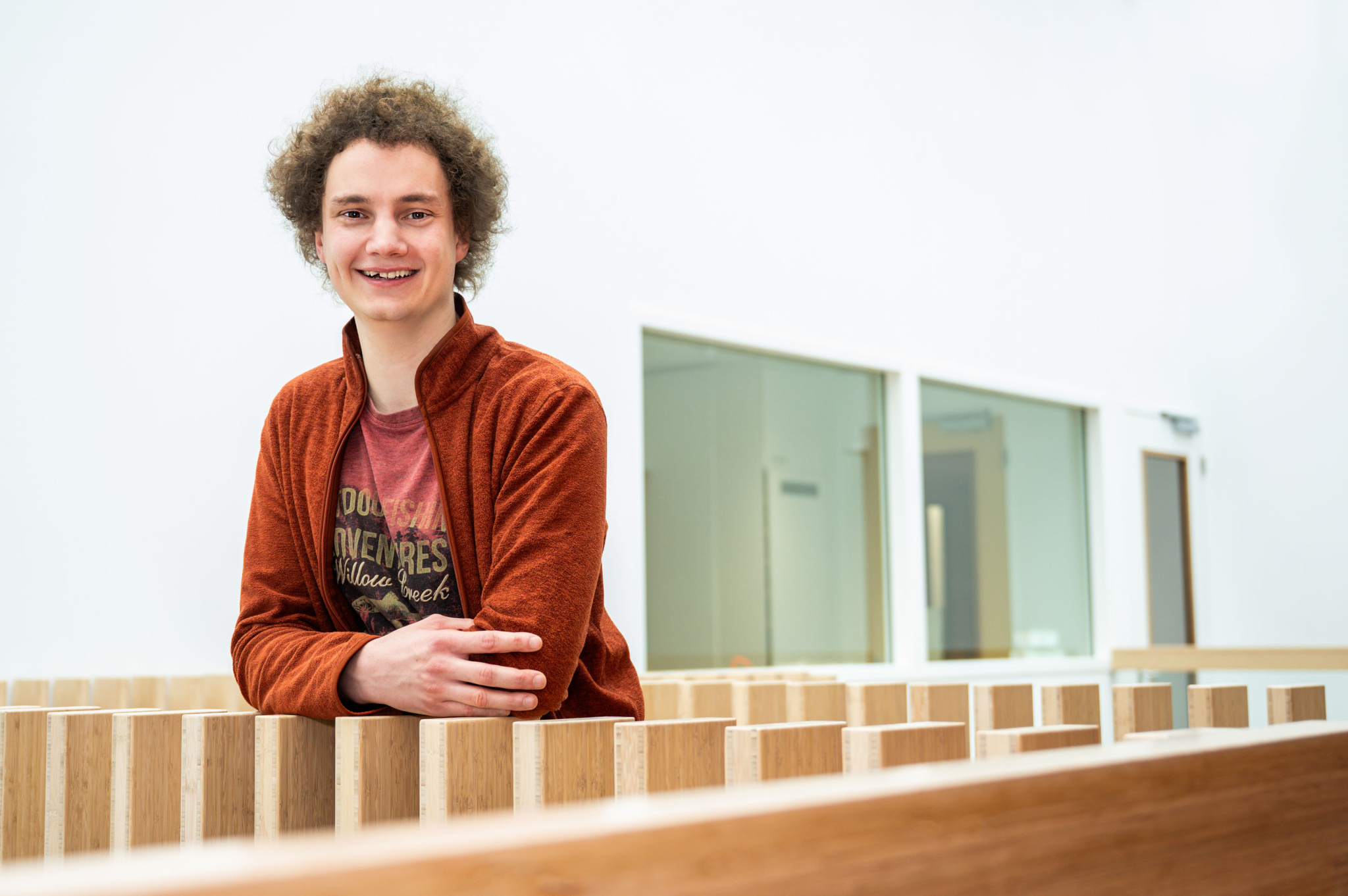
Hoe een onderzoeker die als kind kanker had een nieuw vakgebied hielp creëren
Leron Kok was 13 toen hij de diagnose leukemie kreeg. Tijdens zijn periode op de middelbare school lag hij twee jaar in het ziekenhuis en kreeg hij een stamceltransplantatie. Tegenwoordig is hij promovendus aan het Prinses Máxima Centrum voor kinderoncologie. Leron is een van de hoofdauteurs van een recent artikel in Nature dat een naam geeft aan een lang over het hoofd geziene groep kleine eiwitten die belangrijk kan zijn bij kanker: peptideïnes. In dit interview deelt Leron zijn perspectief over wat de ontdekking betekent voor het kankeronderzoek, hoe het was om deel uit te maken van het grote consortium achter het artikel over peptideïnes, en wat dit werk voor hem betekent.
Een groot deel van ons genoom werd lange tijd afgedaan als ruis. Van veel stukken DNA die niet voldoen aan de klassieke definitie van een gen werd aangenomen dat ze niet van belang waren.
De afgelopen jaren hebben onderzoekers zoals Sebastiaan van Heesch (groepsleider aan het Prinses Máxima Centrum voor kinderoncologie, co-lead van de Therapeutic Vaccines-workstream van Oncode Accelerator en Junior Investigator bij Oncode Institute) aangetoond dat deze stukken DNA kleine eiwitten kunnen produceren, die gezamenlijk het "dark proteome" worden genoemd. Bijzonder is dat sommige van die kleine eiwitten belangrijke biologische functies blijken te hebben, ook bij kanker. Een aantal zou zelfs mogelijkheden kunnen bieden voor de ontwikkeling van nieuwe therapieën tegen kanker. Het werk van Leron Kok, promovendus in de onderzoeksgroep van Sebastiaan, helpt om het dark proteome aan het licht te brengen.
Leron’s weg naar dit onderzoek begon lang voor zijn eerste dag in het lab. Als tiener was hij zelf kankerpatiënt.
"Ik was 13 toen bij mij acute promyelocyten leukemie werd vastgesteld, dus ik was oud genoeg om veel van wat er met me gebeurde te begrijpen," vertelt Leron. "Als ik bijvoorbeeld een echo van mijn hart kreeg, wilde ik meer weten over het hart en de aorta. Misschien was het ook een manier om met alles om te gaan: het te begrijpen. Ik denk dat dat me is bijgebleven: willen weten hoe alles werkt."
Een nieuwe naam voor een nieuw onderzoeksveld
Hoewel de eiwitten van het dark proteome tientallen jaren over het hoofd zijn gezien, begonnen de afgelopen tien jaar enkele onderzoeksgroepen ze te bestuderen. Gewapend met nieuwe technologieën waarmee ze eiwitten konden opsporen die met oudere methoden onzichtbaar bleven, ontdekten pioniers van het dark proteome zoals Sebastiaan, Leron en hun collega's in het internationale TransCODE-consortium duizenden van deze kleine eiwitten.
Toch bleef er nog steeds veel onduidelijkheid over het dark proteome. Bovendien ontbrak het dark proteome in de grote eiwitdatabases die door veel onderzoekers worden gebruikt. Leron legt uit waarom dat relevant is: "Dit betekent dat onderzoeksgroepen specifiek naar kleine eiwitten uit het dark proteome moeten zoeken om ze mee te nemen. Een lab dat zich niet specifiek op het dark proteome richt, zou die kleine eiwitten niet meenemen in zijn screens."
Het gevolg: het dark proteome bleef door de meeste wetenschappers over het hoofd gezien. De recente publicatie in Nature verandert dat.
Leron legt uit: "Door peptideïnes een naam te geven, wordt het makkelijker om ze te bestuderen en erover te communiceren. Het zorgt er ook voor dat data zich kunnen opstapelen, in plaats van dat losse groepen er onder verschillende namen over publiceren. Eén naam kan het onderzoek versnellen." De eenduidige definitie maakt het ook mogelijk om peptideïnes in wetenschappelijke databases te categoriseren, waardoor andere onderzoekers ze kunnen vinden.
Als start van dit nieuwe tijdperk van het catalogiseren van peptideïnes deelde het TransCODE team meer dan 1.700 nieuwe peptideïnes die het had gedetecteerd in het openbaar. Deze zijn nu gepubliceerd in diverse grote eiwitdatabases. "Het was vanaf het begin de bedoeling om de bevindingen openbaar te maken," zegt Leron. "We kunnen veel meer vinden als informatie in het openbaar beschikbaar is en meer mensen ermee aan de slag gaan. Er is nog zoveel onderzoek te doen naar het dark proteome dat geen enkele groep dat alleen kan."
De co-auteurs van de publicatie in Nature voerden ook laboratoriumtesten uit om aan te tonen dat sommige van de gevonden peptideïnes belangrijke functies hebben. Eén bleek cruciaal voor het overleven van kankercellen. "Het is niet zomaar rommel, zoals mensen vroeger dachten," zegt Leron. "Peptideïnes kunnen echt een functie hebben."
Omdat veel peptideïnes op het celoppervlak voorkomen en processen in kankercellen kunnen reguleren, kunnen ze wetenschappers helpen nieuwe behandelingen tegen kanker te identificeren, zoals immuuntherapie. "Peptideïnes zijn niet direct een nieuwe behandeling tegen kanker," waarschuwt Leron. Ze kunnen een mogelijke aanwijzing zijn in de zoektocht naar nieuwe therapieën, die wetenschappers nu systematischer kunnen onderzoeken.
Werken in een internationale samenwerking
Leron kwam als bioinformaticus bij het dark proteome-project. Het was zijn eerste baan, slechts drie maanden nadat hij zijn master had afgerond. Hij stapte meteen in het TransCODE-consortium, een internationale samenwerking van meer dan 60 onderzoekers verspreid over meer dan 30 instituten wereldwijd. "Opeens zat ik in vergaderingen met groepsleiders van over de hele wereld en deed ik bioinformatische analyses voor hen," blikt hij terug. "In het begin dacht ik soms: wat kan ik bijdragen aan dit vakgebied als er al zoveel experts bij betrokken zijn?"
Leron zette door, verdiepte zijn rol in het project en begon een promotietraject gericht op het dark proteome. Hij analyseerde een grote hoeveelheid zogeheten immunopeptidomics-data en leerde die data daarbij beter kennen dan wie ook.
Met die expertise kwam verantwoordelijkheid. "Als je zo veel met de data werkt, word je degene die de data het best kent en kun je nieuwe dingen vinden. Je moet ervoor zorgen dat het klopt en robuust is, en dat je het goed uitlegt. Het was mooi om te zien dat ik goed leerde communiceren met alle groepsleiders en dat ze mijn input serieus namen."
De brede samenwerking was ook essentieel voor de wetenschappelijke doelen van het artikel. Leron legt uit: "Peptideïnes als concept introduceren was niet mogelijk geweest zonder zoveel experts aan boord. Anders was het gewoon een artikel geweest met de boodschap: 'Hé, we kunnen deze dingen peptideïnes noemen.' Je hebt consensus nodig."
De samenwerking is al spannend gebleken voor de bredere wetenschappelijke gemeenschap. Binnen de academische wereld blijven onderzoekers de mogelijke rol van het dark proteome en peptideïnes bij kanker onderzoeken, en zijn nieuwe academische projecten en samenwerkingen, zoals de Cancer Grand Challenge ILLUMINE, al van start gegaan. Ook wetenschappers uit de industrie nemen het waar: een reeks biotechbedrijven in de startupfase onderzoekt het dark proteome om nieuwe doeleiwitten voor geneesmiddelen te vinden.
Het Prinses Máxima Centrum: waar het werk plaatsvond
Leron’s eerste kennismaking met het Prinses Máxima Centrum was tijdens de laatste stage van zijn masteropleiding. Na die ervaring wist hij al dat hij wilde terugkomen.
Een deel van de aantrekkingskracht is de cultuur. Leron beschrijft hoe het Máxima Centrum is gebouwd met patiënten en ouders in gedachten. Zo zijn er kamers waar ouders dicht bij hun kind kunnen slapen, maar in een apart bed, en activiteiten die speciaal voor adolescenten zijn ontworpen – de leeftijdsgroep waar hij zelf toe behoorde tijdens zijn behandeltraject.
Leron voelde zich ook aangetrokken door de kans om bij te dragen aan onderzoek naar kinderkanker. "Ik herinner me dat ik luisterde naar een externe spreker uit de VS die werkte aan het subtype leukemie dat ik had, en hoe de standaardbehandeling sindsdien was veranderd," zegt hij. "Dat is me bijgebleven."
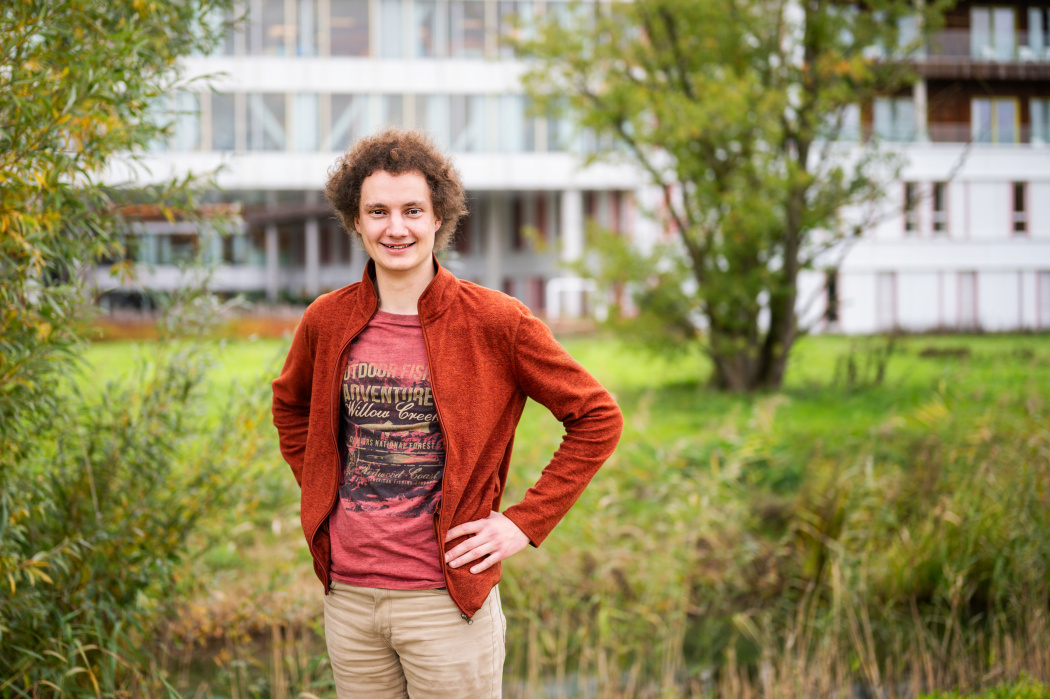
Op de vraag wat hij tegen patiënten zou zeggen die dit artikel lezen, antwoordt Leron bedachtzaam: "Patiënten vormen zo'n diverse groep dat ik niet denk dat één advies voor iedereen geldt. Maar waar ik persoonlijk veel waarde aan hechtte, waren de mogelijkheden die ik kreeg via organisaties zoals de Make-A-Wish Foundation en Stichting Kinderoncologische Vakantiekampen. Ik mocht naar Disney, ik ging skiën, ik ging een weekend naar de Belgische natuur. Op dat moment vroeg ik me soms af: is dit niet te veel? Eis ik niet te veel op? Want het kan natuurlijk allemaal doordat mensen doneren. Maar later was ik blij dat ik door deze ervaringen herinneringen kon maken en gave verhalen had die anders waren dan: ik lag twee jaar in het ziekenhuis tijdens de middelbare school. En er waren niet zoveel mogelijkheden om een aantal van de normale dingen mee te maken die anderen wel meemaakten. Achteraf denk ik dat deze activiteiten ook hebben geholpen om de behandeling vol te houden, omdat ze afleiding gaven van alle behandelingen en ook alle onzekerheden. Dus ik zou zeggen: pak die kansen."
Betekenisvol onderzoek: peptideïnes en verder
Als bioinformaticus werkt Leron niet direct met patiëntmateriaal en beschrijft hij zijn dagelijkse werk als "scripts op mijn scherm". Maar in het Máxima is de context nooit ver weg. "Soms heb ik van die momenten, zoals bij deze interviews, of als ik door het Máxima loop, dat ik denk: ja, dit gaat over patiënten, en ik ben zelf die patiënt geweest. Het gaat erom toe te werken naar nieuwe behandelingen, zoals die waardoor ik het heb overleefd."
In de toekomst hoopt Leron dat het onderzoek naar peptideïnes uitgroeit tot een nieuw vakgebied en dat sommige peptideïnes waardevolle aangrijpingspunten voor immuuntherapie blijken te zijn. Persoonlijk wil hij blijven bijdragen aan betekenisvol kankeronderzoek. "Ik hoop dat ik nieuwe inzichten, ideeën en hypotheses kan blijven aandragen die het vakgebied vooruit kunnen helpen," besluit Leron. "In zekere zin heb ik mijn hele leven geprofiteerd van al het onderzoek dat mij in leven heeft gehouden. Ik hoop dat ik daar iets betekenisvols voor terug kan doen."
Over het Prinses Máxima Centrum voor kinderoncologie
Jaarlijks krijgen ongeveer 600 kinderen in Nederland kanker. Nog steeds overlijdt één op de vier kinderen met kanker aan deze ziekte. Als een kind ernstig ziek is door kanker, staat maar een ding voorop: genezen.
Daarom werkt het Prinses Máxima Centrum voor kinderoncologie elke dag grensverleggend en gepassioneerd samen aan het verbeteren van de overlevingskans en aan de kwaliteit van leven van kinderen met kanker. Nu, en op de langere termijn. Want kinderen hebben nog een heel leven voor zich. Het Prinses Máxima Centrum is geen gewoon ziekenhuis, maar een onderzoeksziekenhuis. Alle kinderen met kanker in Nederland worden hier behandeld. Daarmee is het Prinses Máxima Centrum het grootste kinderkankercentrum van Europa. Ruim 600 onderzoekers en 900 zorgprofessionals werken nauw samen met Nederlandse en internationale ziekenhuizen aan betere behandelingen en nieuwe perspectieven op genezing. Zo geeft het Prinses Máxima Centrum voor kinderoncologie het kind van vandaag de allerbeste zorg én worden belangrijke stappen gezet om de overlevingskansen voor de kinderen die nu nog niet genezen, te verbeteren.
Website: https://www.prinsesmaximacentrum.nl/en
Dit onderzoek is uitgevoerd door het TransCODE-consortium, een internationale samenwerking van meer dan 60 onderzoekers bij ruim 30 instellingen wereldwijd. Het consortium wordt gezamenlijk geleid door het Prinses Máxima Centrum voor kinderoncologie in Nederland, de University of Michigan Medical School, het EMBL European Bioinformatics Institute in Hinxton en het Institute for Systems Biology in Seattle.
Website: https://transcodeconsortium.org
Photo credit: Laloes Fotographie