

News
The collaborative nature of the program is key
Prof. dr. Mario van der Stelt (Leiden University) has been involved in the Oncode Accelerator program since its conception in 2021. ‘Only 5% of all small molecules in clinical trials will result in a therapy; this means there’s an enormous potential to do better.’
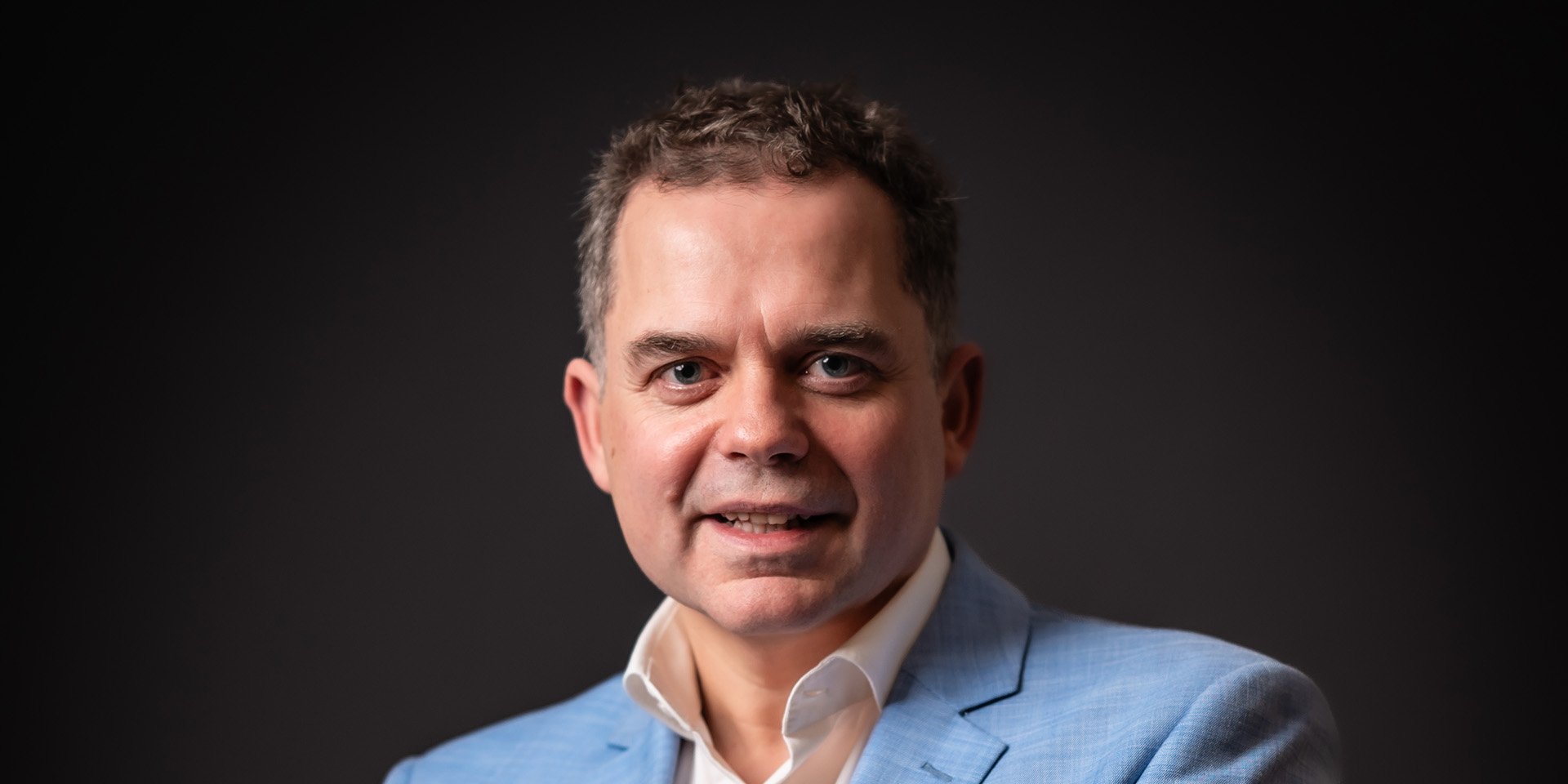
Mario van der Stelt (Leiden University), co-lead of the Small Molecules Workstream in the Oncode Accelerator program, smiles broadly when confronted with the statement that he is one of the ‘architects of the program’. ‘That is an exaggeration’, he says, although he has been involved since the early stages when Oncode Accelerator was only an idea. How did an idea transform into a complex and ambitious program with over € 700 million in funding?
‘Within Oncode Institute, where I’m also involved as an Oncode Investigator, we were discussing how we could translate our fundamental discoveries into clinical solutions for patients’, explains van der Stelt. ‘In 2020, I suggested setting up a small molecule drug discovery pipeline with industrial partners. When the National Growth Fund (NGF) was founded, we quickly decided our idea was a perfect fit for the overall goals and vision of the NGF. Together with Tale Sliedrecht, current co-executive director of Oncode Accelerator, we wrote down everything that was needed to set up such a pipeline for small molecules and biologics, and put that in a project proposal.’
The NGF then suggested merging their initiative with several other proposals in the cancer therapy domain, to come to an integrated proposal to innovate the preclinical drug discovery process of all four major cancer therapeutics – small molecules, cell and gene therapy, therapeutic vaccines, biologics – with three innovation platforms – organoids, artificial intelligence, patient cohorts. Hence, Oncode Accelerator was born, or at least conceived.
Small molecules and the potential for improvement
A chemist by education and during his PhD, Van Der Stelt is currently a chair and full professor of Molecular Physiology at Leiden University. His present focus is on so-called ‘small molecules’, low molecular weight organic compounds capable of influencing a biological process. They are generally much smaller than nucleic acids, antibodies and proteins. Most classic chemotherapy drugs, like cisplatin, doxorubicin and cyclophosphamide, are small molecules. They have been around since the dawn of cancer therapies. Can we still expect breakthroughs in this field though?
Van der Stelt’s body language says ‘of course!’. ‘A new dawn has emerged in small molecule drug discovery, exemplified by innovations like protein degraders or molecular glues, which render proteins traditionally considered undruggable now viable targets within the realm of small molecule therapeutics.’
Cancer treatment is not only about administrating a treatment that works but also about avoiding the prescription of something that does not work or hardly works.
Furthermore, Van Der Stelt explains that he will address the largest bottlenecks for small molecules: lack of efficacy and unexpected toxicity. ‘These are the major factors that make small molecule drugs fail in the clinic. This is after they’ve come a long way in the preclinical development phase. Only 5% of all small molecules in clinical trials will eventually result in a therapy. This means there’s an enormous potential to do better. If we can improve the success rate of the clinical development process to only 10%, this means already twice as many drugs will reach the patient.’
‘It also means patients are less likely to be exposed to anticancer drugs with limited efficacy or potential toxic liabilities’, he continues. ‘Cancer treatment is not only about administrating a treatment that works but also about avoiding the prescription of something that does not work or hardly works.’ This touches upon the main goal of Oncode Accelerator, Van Der Stelt states: ‘We want to be able to assess the chances of success earlier in the process, to focus time and money on the most promising candidates.’
Collaboration between product workstreams and innovation platforms
What makes Oncode Accelerator unique, according to Van Der Stelt? ‘I’m hesitant to call individual resources in the program unique, but the fact that we have access to so many diverse, high-quality resources and expertise, both from academia and industry, gives us a phenomenal starting position. For example, for the Small Molecules Workstream I expect a lot from using both tissue material from patients, and organoid models. This is what will address our toxicity challenge as well as give us an idea of efficacy sooner.’
The third innovation platform is artificial intelligence. How is the Small Molecules Workstream going to use this fast-moving field? Van Der Stelt: ‘We will benefit from new AI tools on multiple levels. For example, when it comes to selectivity predictions of drugs that influence kinases, a family of over 500 proteins regulating all kinds of processes, including cancer-related ones.’ In addition, AI models enable them to design small molecules with promising characteristics more efficiently. ‘Not only concerning toxicity or effectiveness but also solubility, metabolic stability and other pharmacokinetic properties. This saves us a lot of time synthesizing non-effective compounds in the lab.’ Speculating about new AI possibilities in the near future clearly excites Van Der Stelt . ‘We expect that new, integrated AI models will be of great help in the design of novel small molecules with all necessary characteristics.’
The Small Molecules consortium
Oncode Accelerator is all about collaboration and pooling resources. How is he going to effectively work together with all partners in the Small Molecules consortium? ‘We shouldn’t think of a “we-versus-them” scenario’, he is quick to correct. ‘In Oncode Accelerator, we are partners, and we can’t succeed unless we work together. No single party has all the expertise and facilities that we need. The collaborative nature of the project is key.’ This is reflected in the fact that Van Der Stelt co-leads the Small Molecules Workstream together with Luc van Hijfte, senior vice-president of Symeres, a contract research organization for drug discovery partnering in Oncode Accelerator.
The fact that we have access to so many diverse, high-quality resources and expertise, both from academia and industry, gives us a phenomenal starting position.
He explains how academic partners often have more room to develop new concepts, which can then be transferred to the industrial partners for further development. Industry partners can provide large-scale or high-throughput facilities, as well as the knowledge and experience to produce compounds under GMP conditions. As an example, he mentions recent advancements in chemical biology like click-chemistry, protein degraders, molecular glues, activity-based protein profiling, and chemical proteomics. ‘These technologies were developed in academia’, he says. ‘They enable us to develop anticancer drugs against targets that were considered to be undruggable. They allow us to study target engagement and off-target profiling of clinical candidates in an early setting. This is a fantastic new development that we also want to employ in Oncode Accelerator, and scale up with our industry partners.’
Synergy between Oncode Accelerator and Oncode Institute
Van Der Stelt is also an Oncode Institute Principal Investigator. How are these roles – and these initiatives – complementing each other? ‘It is a perfect fit’, he says. ‘Oncode Institute has an emphasis on fundamental research, but is not in the best position to do preclinical development of drug candidates. We need industry partners for that. Therefore, they are key players in the Oncode Accelerator program. The activities in Oncode Accelerator represent the logical next steps after the findings discovered by Oncode Institute.’
Oncode Accelerator is committed to choosing a patient-centric approach, to always keep in mind that our main goal is to improve patient outcomes. However, a secondary goal is to contribute to the Dutch economy. How does Van Der Stelt envision this economic contribution? ‘We have to be realistic about this’, he says. ‘Much depends on the way we approach the Demonstrator processes. Those are going to be crucial.’ These Demonstrators, preclinical development projects for promising targets, are at the core of the program, serving as ‘proof of principle’ for Oncode Accelerator’s approach. Academic groups, biotech companies and other third parties can apply for a Demonstrator project.
However, revenues are not only made at the end of the Demonstrator process, he adds. ‘Every phase of our drug discovery process creates value. Think of IP and spinoff companies, but also the infrastructure, which will be open to third parties.’ Van Der Stelt likes to look at it from a broader perspective. ‘Value also means employment and acquiring knowledge. For example, PhD students will learn and develop themselves within the context of a high-profile, inspiring program. To me, this is also included in the valorization, although it’s not a primary goal of the program.’
When does he consider Oncode Accelerator to be a success? ‘If after ten years of Oncode Accelerator, we have delivered several new drugs to patients, I consider the program to be a success. It is the ultimate Key Performance Indicator.’ Laughing: ‘But perhaps you shouldn’t write that down, it might haunt me in the future.’