

News
Quantitative Rigor and Collaborative Development: How Seqalis Strengthens Therapeutic Cancer Vaccine Development
Spun out from the Institut de Pathologie et de Génétique at Gosselies Biopark, Belgium, 23 years ago, the company Seqalis has since grown into a state-of-the-art multi-platform analytical services company offering enabling technologies ranging from cytogenomics, to next-generation sequencing (NGS) applications, to its flagship innovation: a patented quantitative T-cell receptor sequencing platform (qTCR-Seq). These capabilities are instrumental for addressing some of the most challenging frontiers in cancer research and care. Seqalis’ mission: to provide cutting-edge, high-quality laboratory testing and techniques coupled with medico-scientific advisory and research and development services. In service of that mission, Seqalis has now joined the Oncode Accelerator ecosystem as a partner within the Therapeutic Vaccines Workstream.

To get to know Seqalis as a company, and how it fits into the Oncode Accelerator ecosystem, we spoke with Jean-Luc Henrioul, COO of Seqalis. A bioentrepreneur with deep roots in both the scientific and commercial dimensions of the life sciences, Jean-Luc has decades of experience in multinational life sciences companies, biotech start-ups, and freelance consultancy, working across the UK, West Africa, Hungary, France, and Belgium. He joined Seqalis five years ago with a clear mandate to bring Seqalis’ unique analytical capabilities to new markets, with a primary focus on oncology.
A Truly Quantitative and Unbiased Platform: The qTCR-Seq Approach
Monitoring the adaptive immune response to immunotherapies is central to evaluating whether a given treatment is working. However, widely available technologies that are used for this purpose, such as ELISpot and standard flow cytometry cannot always provide the specificity and quantitative rigor needed to draw statistically robust, reproducible conclusions across patients and time points. In close collaboration with clinicians at the Grand Hôpital de Charleroi, Seqalis developed the qTCR-Seq approach to fill this gap. “With qTCR-Seq, we believe we have developed the only approach in the marketplace that is truly quantitative and unbiased.” says Jean-Luc. “This technology provides a robust and reproducible method for understanding how the adaptive immune system responds to immunotherapy on a cellular and molecular level.”
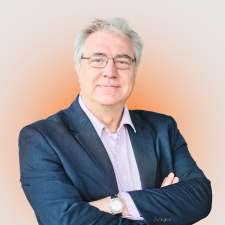
Jean-Luc Henrioul, COO of SeqalisWith qTCR-Seq, we believe we have developed the only approach in the marketplace that is truly quantitative and unbiased. This technology provides a robust and reproducible method for understanding how the adaptive immune system responds to immunotherapy on a cellular and molecular level.
The patented qTCR-Seq platform addresses three pitfalls that can undermine conventional TCR sequencing approaches for immunomonitoring: amplification bias during NGS library preparation, artifactual sequence diversity introduced by polymerase errors during sample preparation, and the sampling challenge, whereby without knowing precisely how many T cells are present in a sample, comparing results across different patients or different timepoints in the same patient becomes statistically unreliable.
Seqalis’ quantitative approach solves this by anchoring every analysis to an accurate TCR molecule count. The qTCR-Seq platform can be applied to patient samples at multiple timepoints to generate quantitative data on T cell repertoire diversity and dynamics in response to treatment. In this way, the platform enables statistically robust comparisons: a prerequisite for generating the kind of data that can support identification of biomarkers, rigorous drug development, clinical decision making, and regulatory submissions. The platform has already been validated in clinical trial settings at the Grand Hôpital de Charleroi and has been used by several biotech companies across many types of cancer, such as lung cancer (for a dendritic cell-based therapeutic cancer vaccine) as well as breast and colorectal cancers (for a neoadjuvant approach leveraging chemo/radiotherapies in combination with immune checkpoint inhibitors).
Seqalis is strongly convinced that close collaboration with hospitals like the Grand Hôpital de Charleroi is crucial. It provides the company with a clear understanding of medical oncologists’ daily practice, and the challenges that they face in treating cancer patients in a meaningful clinical timeframe relative to disease progression. This is especially true for the development and the use of therapeutic personalized cancer vaccines: real, practical questions such as production and quality control timelines need to be considered during their development to meet the clinical challenges. The same deep understanding of clinical realities is also necessary for development of predictive, companion, and toxicity biomarkers, which must perfectly fit into the clinical journey and treatment regimens of cancer patients in order to be adopted by clinicians.
In the words of Jean-Luc: “These are major challenges that the industry needs to take into account, to make sure that what we produce fits into the needs of patients and doctors, and matches the procedures of medical oncologists. If these critical challenges are not properly tackled in partnership with hospitals, the medical oncologists will say, ‘Sorry, but this doesn’t work for us and certainly does not work for our patients’. It is critical to have medical oncologists in the discussion in order to develop the best possible process from discovery to application in the market.”
Jean-Luc Henrioul, COO of SeqalisIt is critical to have medical oncologists in the discussion in order to develop the best possible process from discovery to application in the market.
A Comprehensive Suite of Sequencing and Cytogenomics Technologies
Alongside qTCR-Seq technology, Seqalis also offers expertise and technology across a comprehensive suite of sequencing and cytogenomics approaches, including conventional karyotyping, FISH, SNP arrays, (low-pass) whole-genome sequencing (Illumina, Oxford Nanopore, Ion Torrent), and most recently Optical Genome Mapping (OGM).
These technologies are relevant for both therapeutic vaccine developers and Advanced Therapy Medicinal Product (ATMP) developers. “In cell therapy, one of the biggest challenges is quality control,” Jean-Luc explains. For example, when cells undergo ex vivo expansion during bioproduction, they are exposed to conditions that can inadvertently induce chromosomal mutations. Seqalis supports ATMP developers in characterizing these changes before and after bioproduction, providing evidence for regulators that the manufacturing process does not introduce harmful genomic alterations.
For gene therapy developers, NGS and OGM can also be used to pinpoint exactly where a therapeutic gene has been inserted into the host genome, identify how many copies are present, and characterize their orientation, including whether truncated or inverted copies exist. This level of detail is increasingly demanded by regulatory authorities, and Seqalis is proactively working with industrial partners to help co-define analytical standards in collaboration with regulators.

Embedded in the Oncode Accelerator Ecosystem
As of 2026, Seqalis is embedded within Oncode Accelerator’s Therapeutic Vaccines Workstream, and offers access to its expertise and technologies as a partner of the program. Within the Therapeutic Vaccines Workstream, Seqalis is already in discussions around developing an in vitro screening assay to evaluate the T cell immunogenicity of candidate cancer vaccines at the earliest possible stage of development. This aligns with Oncode Accelerator’s goal to develop and validate innovations that de-risk preclinical development pipelines.
Ultimately, It’s About the Patient
When asked how Seqalis’ work within Oncode Accelerator will ultimately translate into benefits for cancer patients, Jean-Luc Henrioul’s answer is layered and honest about the complexity of the challenge.
The treatments at the frontier of immuno-oncology, whether off-the-shelf therapeutic vaccines or highly personalized approaches, can change lives. However, side effects are still a reality and can be severe. “Current treatments like immune checkpoint inhibitors are very promising but still have a well-documented risk of triggering autoimmune disease. This is in part because it is difficult to pinpoint the dose and frequency at which you can use immune checkpoint inhibitors to treat the cancer and not generate adverse effects. Improved immune monitoring and development of toxicity biomarkers for instance can help us to select the right patient, follow up on the efficacy of the treatment, and diminish adverse effects. In short, our technologies can help us to develop better treatments with fewer adverse effects, and provide robust evidence of the quality of treatments so that they will be more easily approved and reimbursed by governments.”
Jean-Luc Henrioul, COO of SeqalisOur technologies can help us to develop better treatments with fewer adverse effects, and provide robust evidence of the quality of treatments so that they will be more easily approved and reimbursed by governments.
“For personalized medicines, there are still several big challenges that we need to overcome,” Jean-Luc adds. “For example, if you are designing a therapy for one person, how do you design clinical trials? If we decide to favor the personalized, precision medicine approach with therapeutic cancer vaccines – one cancer, one person, one vaccine – will we have sufficient financial resources for the reimbursement of the product? Then there is also the scientific challenge of choosing the right antigens. The ideal vaccine would target a minimum number of defined antigens that are common across patients. To solve challenges like this, we need to be in close conversation with medical oncologists, industry stakeholders, and regulators.”
These are the threads that connect Seqalis’ expertise and platform capabilities to the broader mission of Oncode Accelerator. By providing access to cutting-edge technologies that allow drug developers to generate robust data, better decisions can be made early in the development pipeline. And by fostering collaboration and conversation between drug developers, clinicians, regulators, and payers, drug development can start with the end in mind.
Our shared goal: ensuring that the most promising new cancer therapies will reach the patients who need them. Jean-Luc summarizes: “To quote Dr. Paul Janssen, ‘What’s new? The patients are waiting!’”
About Seqalis
Seqalis™ is the commercial name of BIO.be S.A. since June 2022. The name embodies the concepts of Service, Quality Assurance and Life Sciences. Seqalis continually reinforces its unique expertise and analytical service offering in Anatomical Pathology, Cytogenetics and Molecular Biology through technological and scientific advances in the Life Sciences markets. Together with clients, Seqalis aims to speed up scientific progress through innovative ideas and paradigm shifts by adapting its technologies to make this step achievable. The launch of its quantitative TCR sequencing platform for monitoring the immune response of patients in the rapidly growing field of personalized medicine is one of numerous examples. Seqalis™ will also keep on intensively cross-pollinating with its mother company, the Institute of Pathology and Genetics (IPG), one of the eight Belgian Genetics Centres, to continuously foster innovation in the medical and diagnostic fields and to actively contribute to the development of better and safer treatments for patients.
Website: https://www.seqalis.com