

News
The role of Biologics in the fight against cancer
Jeanette Leusen (UMC Utrecht) and Debby Vermeer (DVK Biotech, UMC Utrecht) co-lead the Biologics workstream within Oncode Accelerator. In this interview, they delve into the world of Biologics and explore how the Biologics workstream is innovating cancer therapy, both from an industry and academic perspective.
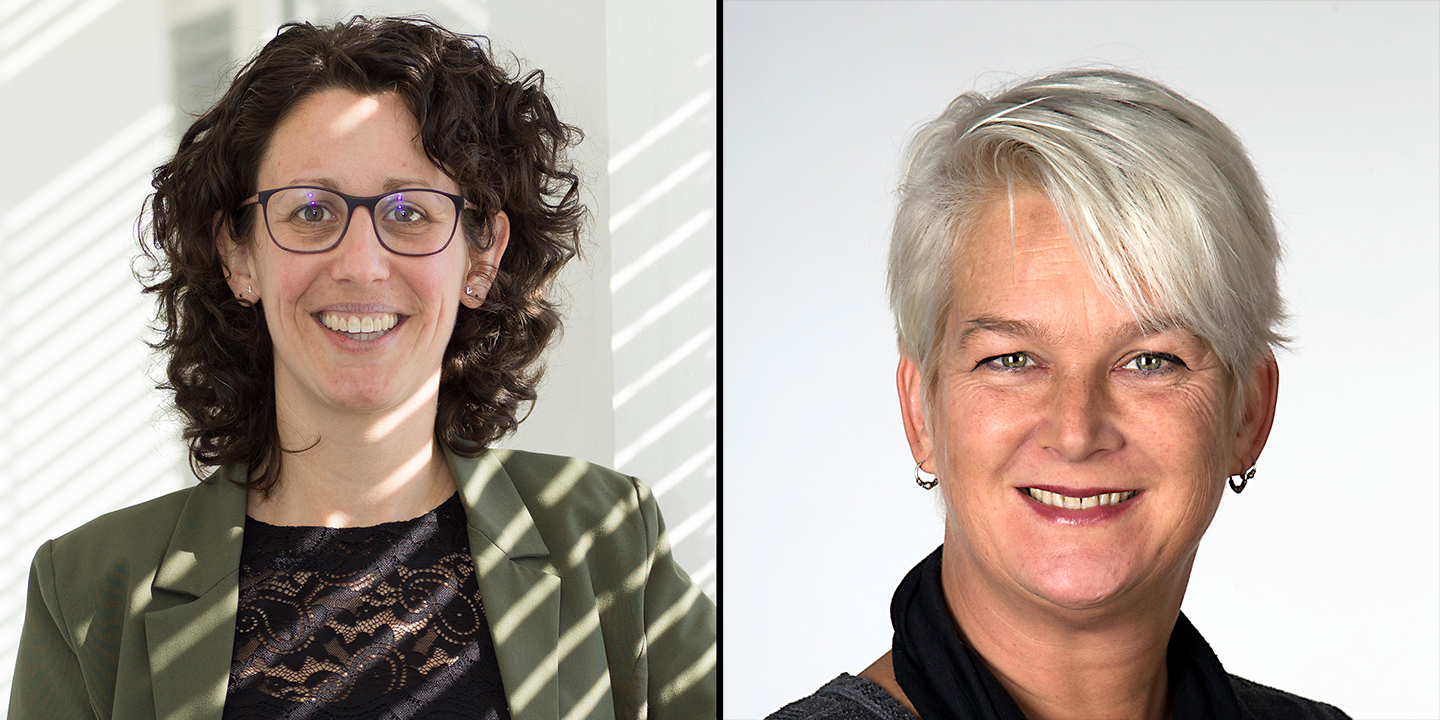
Debby (left in the picture) has a rich background in therapeutic antibody discovery and development. She has served different roles in Contract Research Biotech, including the role of General Manager at IPA Europe B.V. in Oss. Jeanette (right in the picture) has a profound academic background. She is now a full professor antibody therapy, became head of the immunotherapy group of the University Medical Center in Utrecht in 2006, and founded the UMAB facility in 2012. Jeanette is also the scientific founder of TigaTx, a spin-off company on engineered IgA as therapeutic antibody in oncology.
Understanding Biologics
Biologics in cancer research are often antibody-based therapies, with high specificity and affinity to antigens of interest. Debby explains: “Within oncology, antibody-based therapies are designed to specifically target and fight cancer cells while causing fewer side effects to normal, healthy cells. By identifying and developing antibodies against specific molecules on a tumor cell, we can eradicate the tumor. Often, these antibodies are modulated in order to kill the tumor directly, or indirectly , when these antibodies are stimulating the immune system to kill the tumor. As exemplified by regulatory signals that suppress the immune response to cancer cells, the so called Immune Checkpoint Inhibitors, are blocked or the tumor growth is inhibited.”
The role of Biologics within Oncode Accelerator
The Biologics Workstream at Oncode Accelerator stands out for its innovative approach. Debby highlights the strength of this initiative lies in the collaboration between companies and academic institutions to implement the relevant innovations. She explains: “Within the full trajectory of therapeutic antibody development, different fields of expertise are involved: from early discovery to clinical batch production for first in human trials. Each field of expertise has small or large innovations to improve the process with respect to time, costs and the reduction of animal use. The implementation of innovation is often expensive and a high risk, especially in the more expensive phases of the development of the discovered antibodies, such as Process Development for clinical manufacturing. The Biologics Workstream of Oncode Accelerator has the power to actually realize the implementation of the innovative approaches within the full infrastructure, by working closely together with industry and academic partners and thereby improving the cost- and infrastructure within the discovery of novel therapeutics.”
The Biologics Workstream has the power to actually realize the implementation of the innovative approaches within the full infrastructure.
Academia and industry sharing their secrets
Collaboration is a cornerstone of the Biologics Workstream's success. Industry partners offer valuable insights into the challenges faced during research and development. Jeanette explains: "From my perspective, we can learn a lot from industry partners, because they intend to move fast once a target is defined. On the other hand, in academia we are more intrigued by how therapeutics work, understanding the mode of action. This can be very helpful in predicting which approaches might work and which may not. By combining our academic wisdom with the robustness of industry, we can move faster and with more innovation compared to when we act independently. Often, both industry and academia will not share all their knowledge. For industry, because they want to keep their head start. For academia, because many findings cannot be published, especially when there are negative data involved like ideas for drugs that failed. Within Oncode Accelerator, we can now share data. Because in order to reach our goals, academia and industry need each other. For instance, for industry it is hard to get access to well-defined patient cohorts, especially when fresh material like patient’s blood and tumor material is involved. With Oncode Accelerator we can now make this possible.”
Synergy with Oncode Accelerator Platforms and Workstreams
Debby and Jeannette look forward to collaborating with other workstreams and platforms within Oncode Accelerator. Jeanette concludes: “We anticipate to work with several workstreams and platforms within Oncode Accelerator. The Artificial Intelligence platform can benefit us in all steps of development and aspects of the pipeline. In addition, the Organoid and Patient Cohort platforms can help us in selecting lead candidates and avoiding in vivo experiments, moving to the patients much quicker.”