

Building Bridges to accelerate the development of new cancer therapies.
Watch our recent webinar on "The future of developing small molecule-based cancer therapeutics"
The development of cancer therapies is a high-risk, expensive and time-consuming process. More importantly, new therapies often are only effective in a subset of the intended patient population. Therefore, we urgently need to innovate the way we develop cancer therapies. At Oncode Accelerator, we do this through building bridges across relevant expertise to accelerate cancer drug development and impact lives.
During this webinar, Luc van Hijfte from Symeres and Anthe Janssen from Leiden University discussed how through collaboration and incorporation of innovations such as artificial intelligence, the discovery and development of small molecule cancer therapies can be accelerated to the benefit of patients.
We invite cancer drug developers, researchers, and funders to listen to our recorded webinar and hear directly from the experts, gain insight into practical use cases, and learn how AI might shape the future of cancer drug discovery and development.
About the speakers
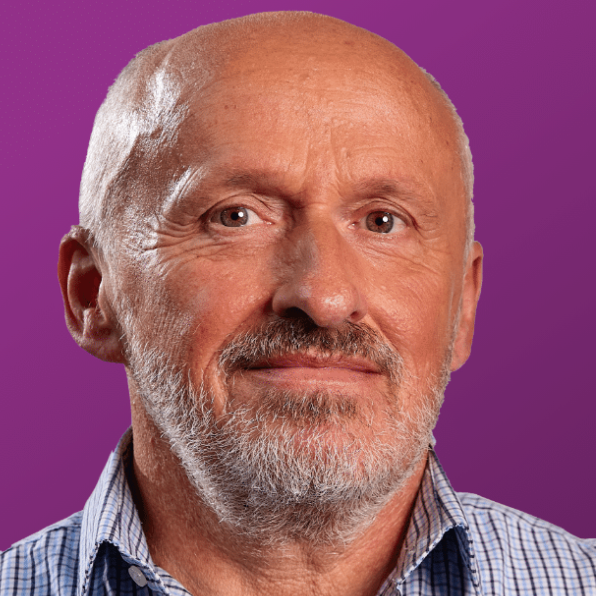
Luc van Hijfte
Dr Van Hijfte holds a PhD degree in Chemistry from Gent University (1984, Belgium) and finalized his academic training by post-doctoral stay at UCSB. He started his industrial career at Merrell Dow in 1986 in Strasbourg, France, where he progressed to head of the medicinal chemistry by the time the site had become part of Sanofi in 1998. In 2002 he moved to Janssen, J&J, first as Research Director of their R&D site in Val de Reuil, France, before taking on the role of Senior Director, Head of Medicinal Chemistry EU, at Janssen Research & Development. He was privileged to contribute to several successful projects, with numerous programs entering into clinical development in the areas of neurosciences, oncology, and infectious diseases.
In 2012 Dr Van Hijfte became CSO of NovAliX, Illkirch, France, before moving in 2017 to his actual position at Symeres, where he oversees all activities related to integrated drug discovery activities for clients worldwide. In parallel, he has been involved in a few start-ups, the principal one being Phytodia since 2015, a Strasbourg based company valorizing scientifically plant extracts for cosmetics and nutraceutics, where he occupies the position of President.
Dr Van Hijfte has been the president of the TechnoPole Chimie-Biologie-Sante in 2004-2012, Vice-President of the French Medicinal Chemistry Society (SCT) in 2015-16, President of the SCT 2017-18, and is currently president of the EFMC. He has been elected and named member of the “Académie Nationale de Pharmacie” in France, for his multiple contributions to pharmaceutical developments.
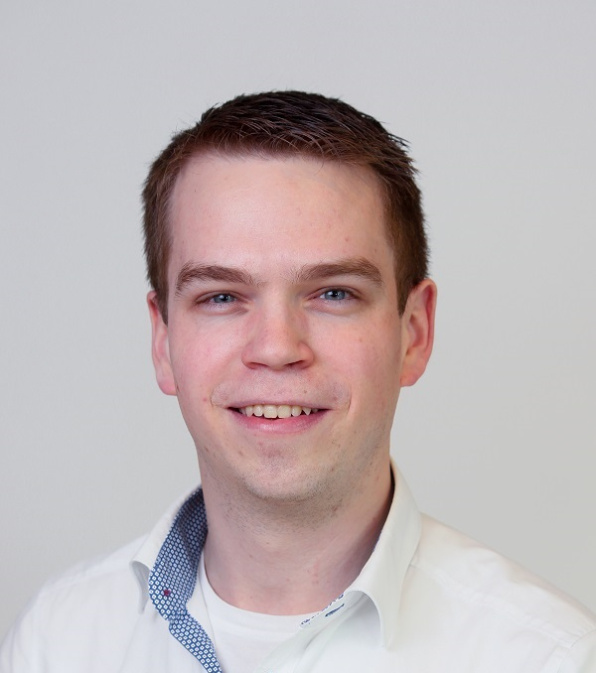
Anthe Janssen
Dr Anthe Janssen studied Chemistry at Leiden University, where he continued with a PhD in medicinal chemistry under the supervision of professor M. van der Stelt. During a postdoc with professor G. van Westen he transitioned more into the computational medicinal chemistry side, using machine learning and existing datasets to speed up pharmaceutical research. Since 2020 he is a principal investigator at Leiden Institute of Chemistry focusing on developing and bringing useful AI tools to the chemical biology workbench.
During the webinar, Anthe will present on the use of AI to predict the feasibilty of de novo drugs.
Using AI to predict the feasibility of de novo drugs In de novo drug design new chemical compounds are generated by deep learning algorithms that work quite well. However, these algorithms result in many candidates, which means we need to prioritize which molecules we want to test first. Interdisciplinary work from Leiden University showed that we can use AI to assess whether molecules can be synthesized quickly and to predict if they actually bind to their intended target, thus increasing the efficiency of de novo drug design.