

News
Where Technology Meets Biology: Creating New Possibilities for Cancer Vaccines
The cells within your body don’t operate in isolation. Just like humans do on social media, cells are constantly communicating status updates. But instead of publishing status updates to the internet, cells leave tiny clues on their surfaces about what’s going on inside — molecular whispers saying that everything is fine, or that something has gone wrong. In turn, the immune system is constantly scanning these communications to distinguish healthy cells from those that are damaged, infected, or cancerous. For scientists, learning to read these molecular status updates opens the possibility of designing therapies that can teach the immune system to recognize and attack tumors with precision. Fabio Marino, a scientist working within the Oncode Accelerator ecosystem, is at the forefront of understanding this molecular language and harnessing it for the development of new cancer therapies.
Learning the Language of Proteins
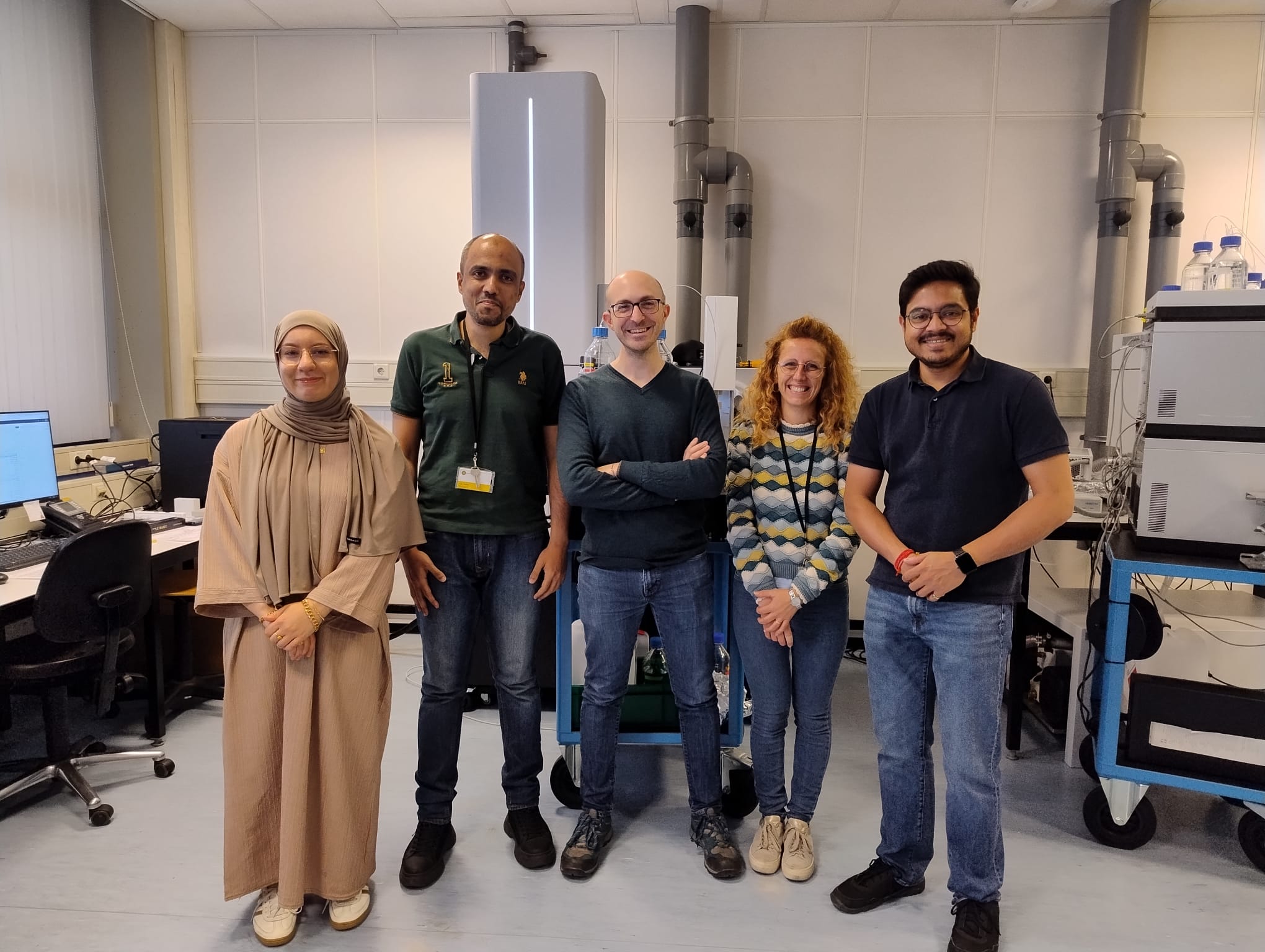
Fabio Marino is a scientist who is comfortable at interfaces – between technology and biology, academia and industry, and discovery and translation. His path began at Utrecht University, with a PhD in the group of Professor Albert Heck. Initially, his doctoral work focused mainly on technology development. But during that period, the emergence of a new subfield in biology changed the course of his career:
“Around 2013, Albert asked me: ‘Do you want to work on immunopeptidomics?’ Back then, the field was almost non-existent. I told him, ‘I have no idea what you’re talking about – give me a couple of weeks to read up on this and I’ll come back to you.’ After reading up on the topic, it made total sense. There were big challenges in this new field – and we love challenges.”
Albert Heck’s research group had a long legacy of combining expertise in technology development with cracking tough biological challenges. “Technology and biology always went hand in hand,” Fabio recalls. Their expertise in deciphering the language of proteins was a perfect fit for the emerging field of immunopeptidomics.
Fabio explains: “Everything in a cell works because of interactions with proteins, their concentration, their location — it’s a tightly controlled system. It’s also dynamic: proteins are constantly being made and destroyed. When proteins are destroyed, they become peptides: smaller pieces of proteins. Those peptides can then be presented on the cell surface.”
Presenting peptides on the cell surface is a way for cells to communicate their status to the rest of the body. Importantly, the peptides can also signal to the immune system when something has gone wrong and an intervention is needed. Fabio elaborates: “If a cell is doing fine, then the immune system passes it by. But when there is something wrong — like cancer or an infection — the presented peptides are different. The immune system recognizes this and can activate to destroy the diseased cells.”
However, sometimes cancer cells can fly beneath the radar of the immune system. In this case, immunotherapies such as therapeutic cancer vaccines can be used to better train the immune system to fight cancer. And that’s where immunopeptidomics – the study of peptides presented on the cell surface – comes in.
Scientists can use immunopeptidomics data to design therapies based on cancer-specific “status updates” on the surface of tumor cells, in order to train the immune system to recognize and attack tumors. The challenge is to find peptides that are truly unique to cancer, and absent from healthy cells, so the immune system can target tumors with precision. This challenge has defined much of Fabio’s career.
Innovation at the Interface Where Tech Meets Biology
Fabio’s fascination with immunopeptidomics outlasted his PhD. After a postdoc in Switzerland, he spent six years helping to build a start-up into an established biotech focused on developing therapeutic cancer vaccines. In late 2024, he returned to Utrecht University to establish his own lab within the Biomolecular Mass Spectrometry and Proteomics Group, embedded in the Therapeutic Vaccines Workstream of Oncode Accelerator.
Back at his roots, Fabio returned to a dual focus: building new analytical technologies and using them to open biological “black boxes.” He says: “There are still pieces of the puzzle that are missing because of limitations in our techniques. I try to bring the two worlds together to push the boundaries of analytics, improve how we can detect peptides, and map out new directions for research and development. To eventually deliver better drugs, we need to invest on both sides. That’s where Oncode Accelerator comes in. Thanks to the support from Oncode Accelerator, we could invest in and develop the infrastructure needed to eventually develop better medicines.”
Fabio Marino, Assistant Professor in Biomolecular Mass Spectrometry and ProteomicsThere are still pieces of the puzzle that are missing because of limitations in our techniques. I try to bring the two worlds together to push the boundaries of analytics, improve how we can detect peptides, and map out new directions for research and development.
An example Fabio and his colleagues recently improved upon was in a technique called mass spectrometry – a key technology used by scientists to understand the language and identity of proteins.
You can think of it like this: inside a cell, there are many different protein “workers,” all doing different jobs. It can seem like a chaotic factory, and it’s difficult to work out the function of all the different employees. One way to understand each worker’s role is to try to talk to each of them individually. This is what mass spectrometry does: separate out the individual proteins working in a cell so that they can be “listened to” individually.
Mass spectrometry is widely used, and standardized methods do a good job of pinpointing individual proteins’ identities and quantities – but there are still limitations. If we return to the factory example, you could imagine that some workers are enthusiastic to talk about their jobs, whereas others don’t want to be interviewed on-the-spot. It’s similar in a cell: not all proteins respond in the same way to standard methods used in mass spectrometry. This meant that it was possible to analyze some types of peptides very well, but other types of peptides would be missed. The way Fabio sees it: “At some point there’s only so much that existing data can give you. Then you need to increase and innovate your infrastructure to get deeper.”
From Prototype to Breakthrough
To overcome this limitation, Fabio and colleagues developed a new approach. They devised a way to process peptides in two different ways within the same workflow to capture more information than before – sort of like giving the workers the choice to either be interviewed on-the-spot, or else email in their answers later, in order to capture more responses.
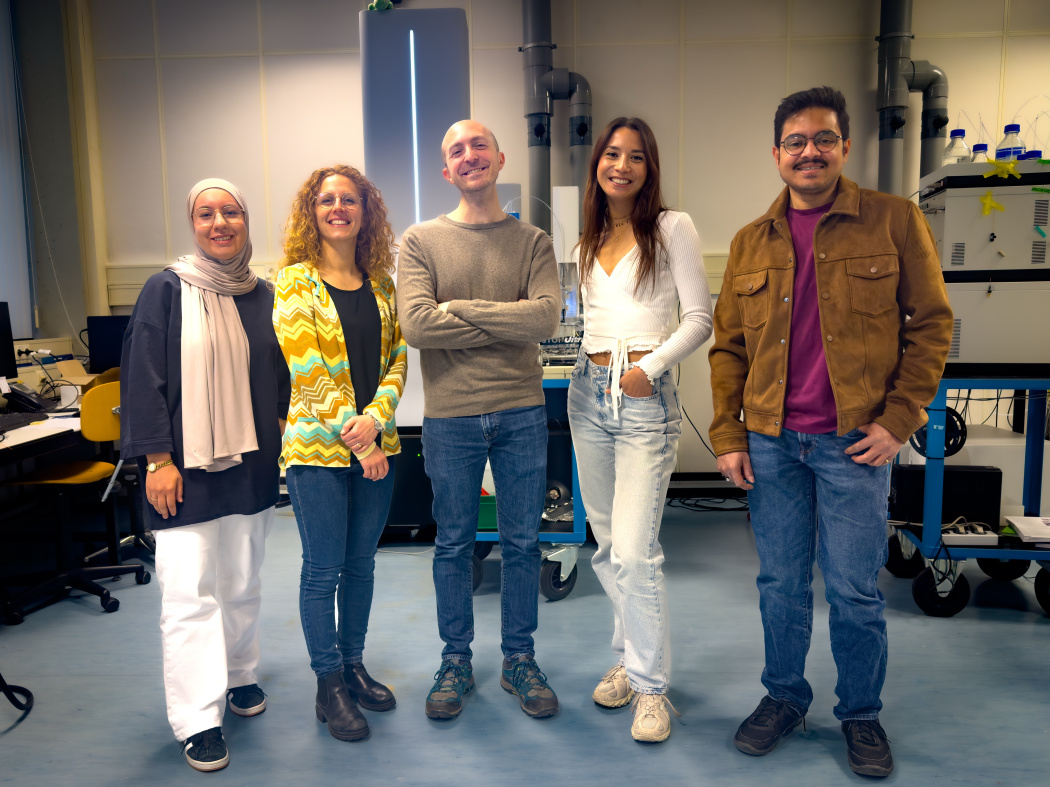
The method, called hybrid fragmentation mass spectrometry, was pioneered the Biomolecular Mass Spectrometry and Proteomics group in collaboration with Thermo Fisher Scientific – a global leader in analytical instruments – by experimenting with modified instruments, software, and hardware. It was then refined through continued public–private collaboration with Thermo Fisher Scientific. “If you want to drive innovation, you need partnerships with the people who build the instruments,” Fabio says. “Thermo Fisher solved several shortcomings of the method and has now introduced a new instrument capable of hybrid fragmentation. And we were the first to use it!”
For Fabio, testing the new instrument was a highlight. “The partnership with Thermo Fisher was very exciting. I was also happy to work with Kyle Fort, who I worked alongside at Utrecht University before he moved to Thermo Fisher. Both sides were well aligned, and the collaboration was seamless.”
Kyle Fort, Product Manager–New High Resolution Accurate Mass Technology at Thermo Fisher Scientific, adds: “We have a long-standing relationship with Utrecht University to drive science and innovation forward, together. Fabio and his team are experts in immunobiology and antigen discovery, while we specialize in mass spectrometry and fragmentation technologies. This complementary partnership allowed us to develop methods on the Orbitrap Excedion Pro that provide new insights that were previously unattainable. These innovations are poised to propel research within Oncode Accelerator, enabling the discovery of previously undiscovered antigens.”
Kyle Fort, Product Manager–New High Resolution Accurate Mass TechnologyFabio and his team are experts in immunobiology and antigen discovery, while we specialize in mass spectrometry and fragmentation technologies. This complementary partnership allowed us to develop methods on the Orbitrap Excedion Pro that provide new insights that were previously unattainable. These innovations are poised to propel research within Oncode Accelerator, enabling the discovery of previously undiscovered antigens.
The smooth collaboration laid the groundwork for exciting results. “When I looked at the first data I thought: oh wow, we are way beyond what we’ve done in the past, and I can see how this will benefit clinical research. Implementing hybrid fragmentation lets us see so much that we couldn’t see before. It’s very substantial – and means that we’ve probably been missing a lot of important peptide regions.” For immunotherapy, that means researchers can now identify new tumor-specific “status updates” that were invisible before, creating new opportunities to train the immune system against cancer.
A new instrument incorporating this technology, the hybrid Orbitrap Excedion Pro Mass Analyzer, was launched by Thermo Fisher in June 2025, and a joint publication detailing its use and potential followed in August. Already, Fabio is looking ahead to the next project: “There are still features of proteins that remain difficult to analyze, even with this instrument. Analytical development should never stop. Otherwise, we’ll always bump into the same bottlenecks. By pushing boundaries with technology while keeping an eye on biology, we can move the field forward.”
Building Bridges to Develop Therapeutic Cancer Vaccines
Since publication of the findings, researchers worldwide have reached out to learn more about this innovative method and technology, and to explore collaborations. Fabio says, “I’ve gotten lots of questions from group leaders and PhD students, both within and outside of Oncode Accelerator. I found it very nice that people reach out and say, ok, how does this benefit me? Basic questions like this lead to interesting discussions on how this technology can fit into and improve different workflows.”
Oncode Accelerator plays a central role in enabling collaborations: “We work a lot with groups from within Oncode Accelerator, especially for understanding the biology and discovering new therapeutic targets, and are also very open to reach more groups that develop therapeutics. Oncode Accelerator is a good bridge to other academic groups and furthermore helps facilitate the creation of more public-private partnerships. This is very important for the success of the oncology ecosystem.”
Professor Albert Heck elaborates: “In our lab, we are always striving for means to further optimize technologies for the analysis of proteins, including immunopeptides by mass spectrometry. Having this as core expertise, the Oncode Accelerator program provides us the means to intensely collaborate with cancer researchers, medical doctors, immunologists, computer scientists and AI experts, aiming for the next breakthroughs. In this latest endeavor in partnership with Thermo Fisher Scientific, we developed new sequencing methods on the Orbitrap Excedion Pro that will help unveil new therapeutic targets within the Oncode Accelerator Therapeutic Vaccines Workstream. Through his training in both academia and industry, and both in proteomics and tumor immunology, Fabio Marino plays a key role in this Workstream.”
Albert Heck, Professor of Chemistry and Pharmaceutical SciencesThe Oncode Accelerator program provides us the means to intensely collaborate with cancer researchers, medical doctors, immunologists, computer scientists and AI experts, aiming for the next breakthroughs.
Crucially, Oncode Accelerator also supports Fabio’s dual focus on technology and biology. “It’s becoming harder and harder to finance technology development, which is essential if we want to find and develop novel therapeutics. Investing in infrastructure and the people who can develop it is key for us to grow. I’m very grateful to Oncode Accelerator for those investments. It’s also a cycle: now we can take some of these learnings and apply them within Oncode Accelerator, which will open up new collaborations and new research directions and help us to develop novel immunotherapies.”
About Fabio Marino
Fabio is an Assistant Professor in Biomolecular Mass Spectrometry and Proteomics at Utrecht University. His lab is part of the Biomolecular Mass Spectrometry and Proteomics group embedded in the Utrecht Institute for Pharmaceutical Sciences and Oncode Accelerator, and he co-leads a laboratory at the Princess Máxima Center for pediatric oncology.
About Utrecht University
Founded in 1636 and located in the heart of the Netherlands, Utrecht University is one of Europe's leading research universities. It is recognized internationally for its high-quality, innovative approach to research and teaching. Utrecht University’s interdisciplinary research targets four themes: