

News
How Omivera's Cellular Kinase Profiling Platform is Reshaping Cancer Drug Discovery
Omivera, a spin-out from Leiden University, has become a partner within Oncode Accelerator, and is now contributing its expertise in chemical proteomics and activity-based protein profiling to Oncode Accelerator’s growing oncology ecosystem. Through our Small Molecules Workstream, drug developers can now access CellEKT: Omivera’s patented cellular kinase selectivity platform.
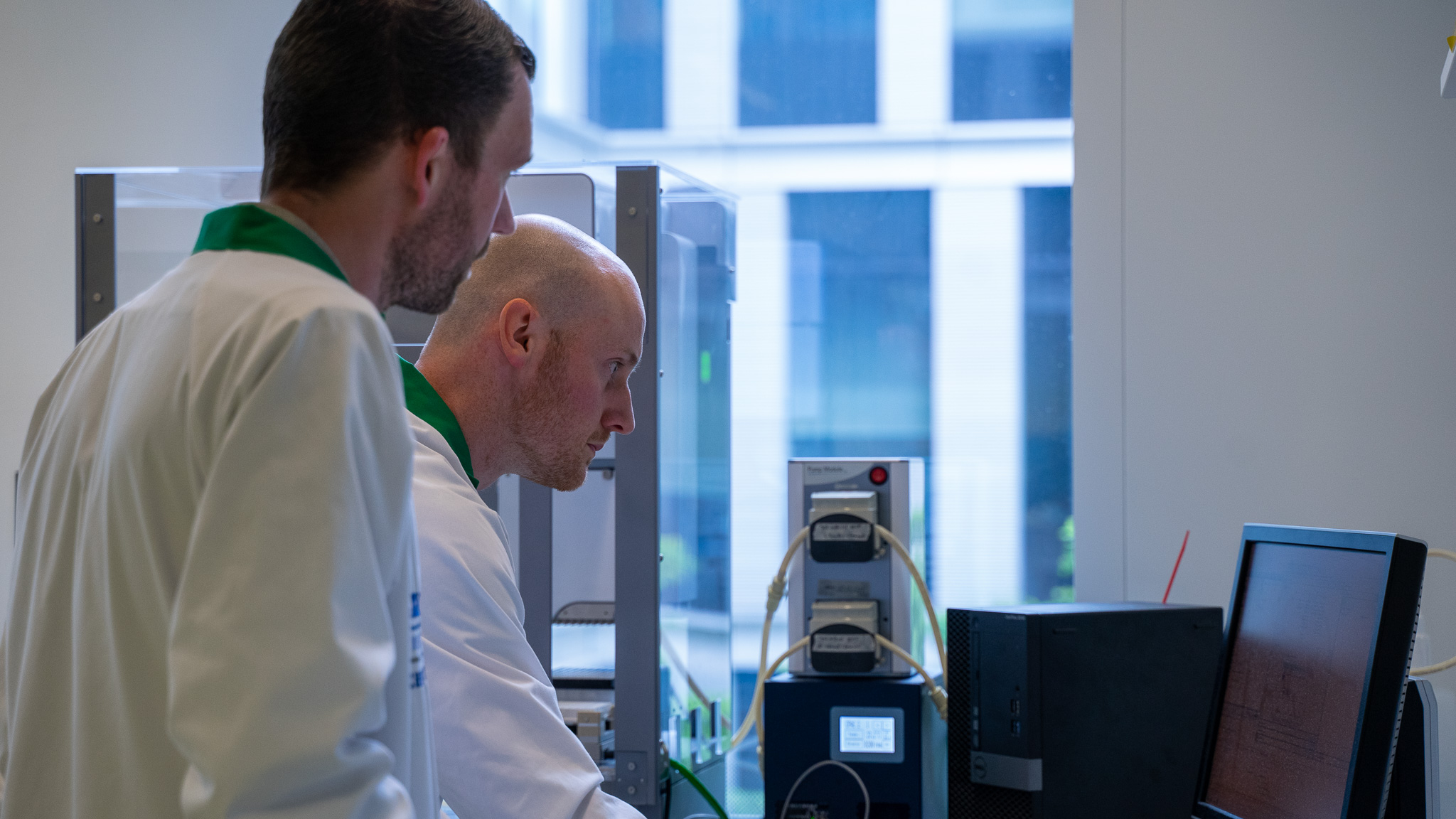
In oncology drug development, failure is common; over 90% of new cancer drugs entering clinical trials ultimately fail. Too often, promising drug candidates advance through early development only to reveal dangerous off-target effects or unexpected toxicities during clinical studies. One powerful way to prevent this is to generate richer and more biologically relevant data earlier in the preclinical pipeline. De-risking and accelerating preclinical development of cancer therapies, for instance through the integration of innovative technology platforms, is the primary goal of Oncode Accelerator. Omivera’s technology is the latest powerful addition to the Oncode Accelerator oncology ecosystem.
Omivera is a Dutch biotech company founded in 2026 that specializes in chemical proteomics: a chemical biology approach that allows researchers to measure how a given drug compound interacts with its targets. Their flagship platform, CellEKT, applies this methodology to the kinome, to profile drug selectivity across approximately 90% of expressed human kinases. Uniquely, CellEKT technology allows for this analysis directly inside unmodified living cells. For cancer researchers and drug developers working within Oncode Accelerator, this means access to a level of mechanistic clarity within a relevant biological context that cannot be reached using classical in vitro biochemical assays.
From Challenge to Innovation
The story of Omivera's technology began with confusing and heartbreaking clinical study results out of France. In January 2016, a first-in-human clinical trial of a small molecule FAAH inhibitor BIA 10-2474 was underway. The target protein FAAH had already been validated as safe in advanced trials by Pfizer and Johnson & Johnson, but still the clinical trial did not go as expected. Despite all precautions, one volunteer died and four others were hospitalized. Regulatory authorities quickly ruled out procedural errors. Something else had gone wrong – but what?
At Leiden University, the now-CSO of Omivera, Anthe Janssen, was working in the lab of Professor Mario van der Stelt. They had a hypothesis: could it be that BIA 10-2474 lacked sufficient selectivity, and off-target effects were making the study participants sick? Within 24 hours of the story breaking publicly, Anthe was already synthesizing BIA 10-2474 in the lab and getting ready to test that hypothesis using activity-based protein profiling.

By early February, the first gel-based data revealed off-target activity, just as suspected. Proteomics experiments began on February 16th. On March 20th, less than ten weeks after the crisis began, a first draft paper was submitted.
The work did not stop there. Through the summer of 2016, the team collaborated with Professor Ben Cravatt's lab at the Scripps Institute and the group of Stephen Kushner, then at Erasmus MC in Rotterdam. Together, they demonstrated that in living cells, BIA 10-2474 was far more active than expected based on classical biochemical assays, and in neuronal cells the compound potently inhibited not only FAAH but also several other targets. The findings were published in Science in 2017, and fundamentally changed how the field understood the importance of selectivity profiling in a cellular context.
"We think this project had a profound impact on how the world sees activity-based protein profiling," reflects Anthe. "To this day, it remains a powerful tool for scientists in all kinds of fields: from target validation to selectivity profiling, and subsequent in vivo studies."

Anthe Janssen, CSO of OmiveraWe think this project had a profound impact on how the world sees activity-based protein profiling. To this day, it remains a powerful tool for scientists in all kinds of fields: from target validation to selectivity profiling, and subsequent in vivo studies.
Omivera was founded to ensure that the technology used to solve the case of BIA 10-2474 would continue to make real-world impact in drug development projects, and to improve the likelihood that issues with selectivity would be spotted and addressed well ahead of clinical trials in the future.
CellEKT: Selectivity Profiling Where Biology Is Actually Happening
Since 2016, Anthe and fellow scientists in the group of Professor Mario van der Stelt continued to fine-tune their technology, in partnership with key players like Roche. In teamwork with Joel Rüegger, now CEO of Omivera, and Berend Gagestein, mass spectrometry specialist and currently scientific advisor for the company, Omivera’s flagship technology platform CellEKT, which focuses on cellular kinase selectivity, was developed and patented.
The team focused on kinases because they are among the most intensively targeted protein families in cancer drug discovery. Over 100 kinase-targeting drugs have received clinical approval from the United States Food and Drug Administration, and many more are in development. Still, designing truly selective kinase inhibitors remains one of the field's most stubborn challenges. Because many kinases share highly similar ATP-binding sites, off-target interactions are often unavoidable and can remain undetected until late in drug development, increasing costs and, in some cases, posing risks to patients. The highly conserved ATP-binding pocket also presents a unique opportunity: carefully designed chemical probes can engage hundreds of endogenous kinases simultaneously, enabling broad target engagement profiling in a single experiment.
CellEKT makes use of this opportunity. By combining cell-permeable molecular probes with chemical proteomics, the platform directly measures how compounds interact with the expressed kinome, alongside hundreds of potential non-kinase off-targets, in living cells. This enables early identification of both intended and unintended targets in a biologically relevant context.
The CellEKT platform works through a competitive chemical proteomics approach carried out in living cells. The four-step method is simple and elegant:
- Cellular incubation. Living cells are incubated with the investigational compound for which selectivity and target engagement is to be assessed.
- Competitive probe binding. Cells are then exposed to Omivera's proprietary small-molecule probe, which binds the ATP-binding pockets of kinases not already occupied by the lead compound under investigation. Omivera's probe set covers approximately 90% of the human kinome, is metabolically stable, and is optimized for cellular uptake. The resulting competitive readout reveals where the compound engages across the kinome.
- LC-MS/MS quantification. Probe-bound targets are isolated and measured by LC-MS/MS, delivering high-confidence, quantitative data.
- Selectivity reporting. Probe occupancy is compared between compound-treated and control samples to produce a precise map of engagement and non-engagement across the kinome.
The result is true cellular selectivity data: because the measurements occur in a biologically intact system, they capture the full complexity of protein–protein interactions and intracellular signaling, which traditional biochemical in vitroassays cannot replicate. Put simply: CellEKT tells scientists what their compound does inside a cell, not just what it does inside a test tube.
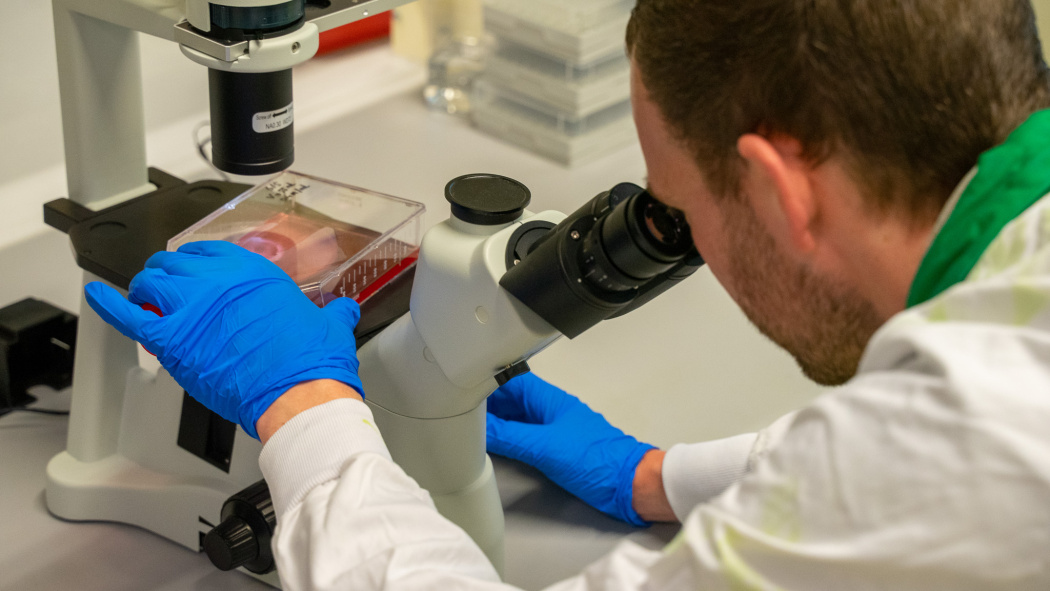
Beyond the Kinome
Although CellEKT was initially developed for kinase profiling, the underlying workflow is modular. At its core, the platform is defined by the chemical probe, which determines the protein or enzyme class being investigated. By exchanging the probe, the same experimental and analytical workflow can be used to study inhibitors interacting with other enzyme classes, making the approach broadly applicable beyond kinases. For example, Omivera has established an activity-based protein profiling (ABPP) workflow to profile more than 100 endogenous serine hydrolases and lipases directly in living cells, as well as a chemical proteomics workflow to measure target engagement of covalent inhibitors across diverse protein classes in complex biological samples, including mouse tissues. Together, Omivera's chemical proteomics and ABPP platforms provide a versatile framework for studying target engagement across a wide range of protein families in physiologically relevant biological systems.
Embedded in the Oncode Accelerator Ecosystem
In addition to being available directly through Omivera, the CellEKT platform is now also available to drug developers through Oncode Accelerator Demonstrator Projects. As part of the Oncode Accelerator community, Omivera can support projects focused on kinase inhibitor development, where CellEKT provides the mechanistic depth to distinguish compounds with high selectivity from those with hidden liabilities. This is particularly valuable early on, for instance at the lead finding and optimization stages, where selectivity data can guide decisions well before costly in vivo studies begin.
The integration of Omivera and their CellEKT technology platform within Oncode Accelerator reflects a broader conviction at the heart of the program: that the path from discovery to clinical candidate can be made faster and more effective by leveraging the right technologies. By combining Omivera's cellular profiling capabilities with other translational expertise within Oncode Accelerator’s Small Molecules Workstream and innovation Platforms, drug developers can move towards better-informed clinical candidates with greater confidence.
Ultimately, that confidence translates to patients. Drugs that reach the clinic with a well-understood selectivity profile are less likely to cause unexpected toxicity and more likely to achieve the therapeutic effect they were designed for. In a field where the cost of late-stage failure is high in time, resources, and patient quality of life, understanding selectivity early is essential.
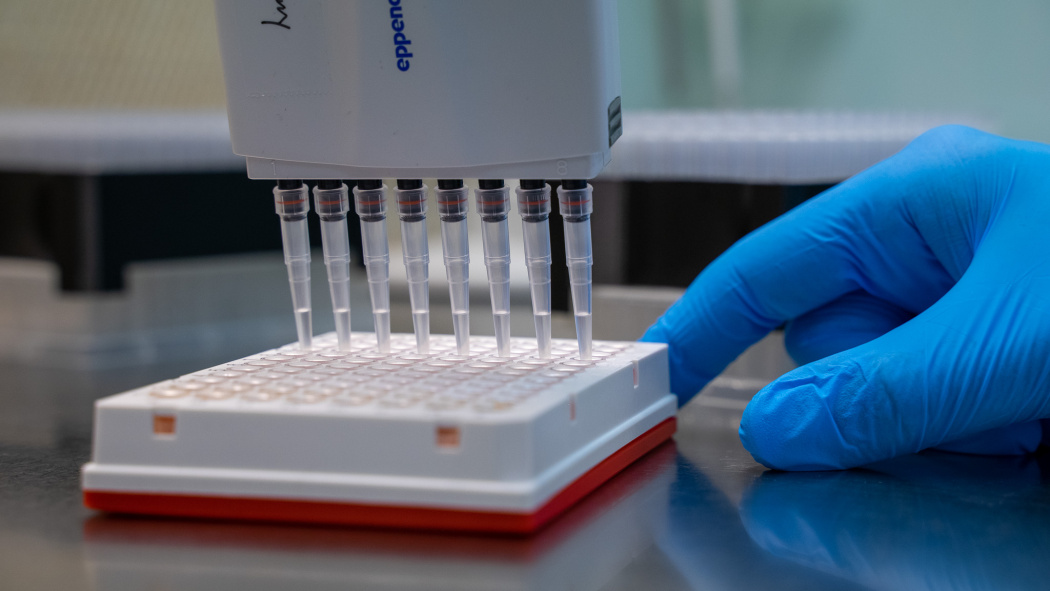
About Omivera
Omivera is a proud spin-off from Leiden University, born from decades of world-class research in chemical biology and chemical proteomics. Strategically located at the Leiden Bio Science Park in The Netherlands, Omivera is at the heart of one of Europe's leading life science clusters. Their proprietary CellEKT technology helps pharma and biotech partners to overcome barriers in the traditional drug discovery process and make critical, data-driven decisions with confidence. Omivera’s mission is to bridge the gap between academic innovation and pharmaceutical development, providing their partners with a decisive competitive edge.
Website: https://omivera.com