

News
Jeanine Roodhart Appointed Professor of Translational Medical Oncology at UMC Utrecht
Treating people with colorectal cancer faster, with the latest therapies. Better tailoring treatments to the individual patient, and preventing unnecessary treatments. That is the future that Jeanine Roodhart, internist oncologist, lead of Oncode Accelerator’s Patient Cohorts Platform, and newly appointed Professor at UMC Utrecht, is working towards. She focuses on colorectal cancer and translational research that directly translates new findings in the laboratory into better care for patients. As of 15 July 2026, Jeanine has been appointed Professor of Translational Medical Oncology at UMC Utrecht.
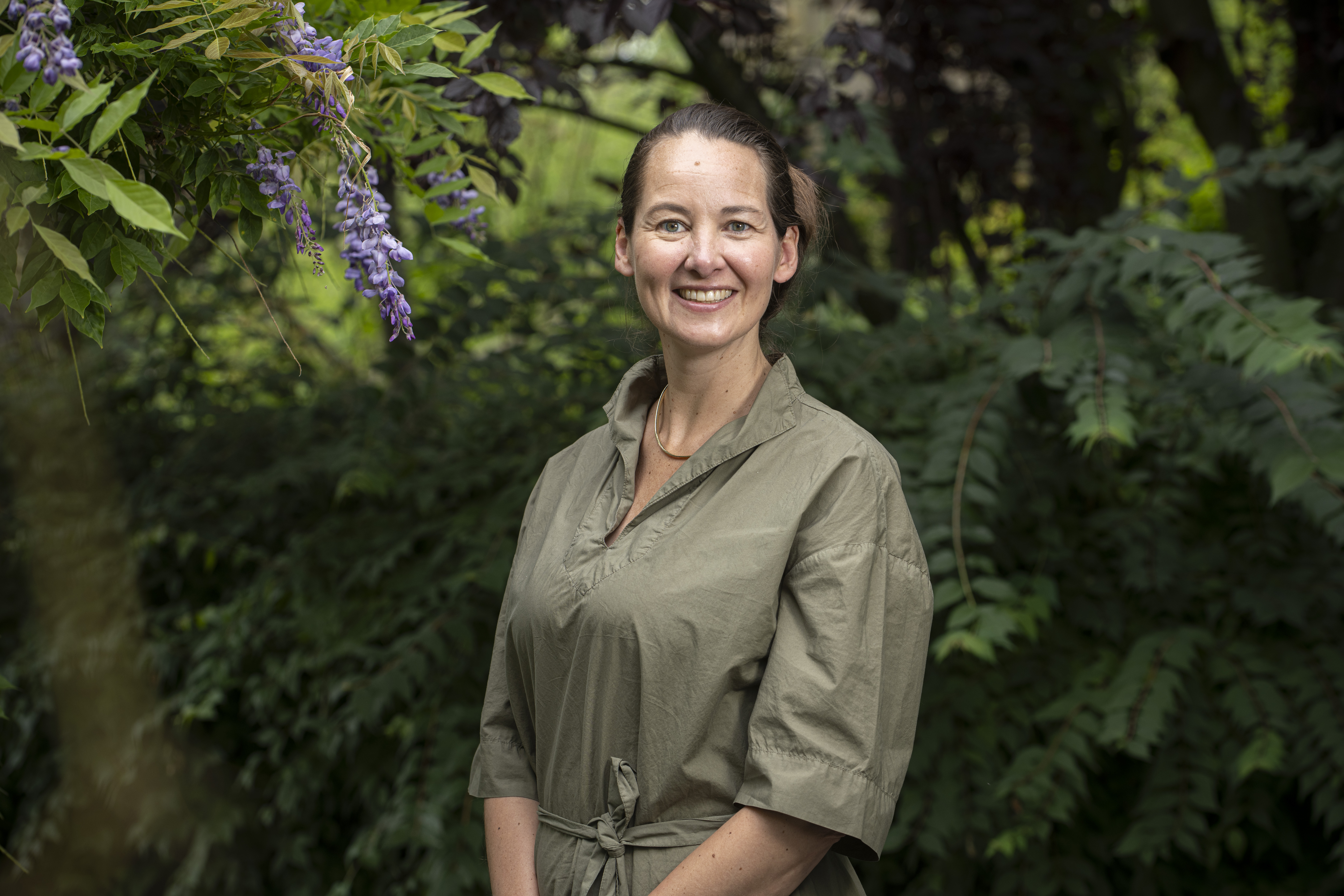
In Jeanine Roodhart’s own words: “My ultimate goal is for every patient to receive the treatment that best suits his or her tumor. They should receive the right treatment at the right time, but also no more treatment than is necessary. That’s what we work together towards every day.”
The Right Treatment for Each Unique Patient
Colorectal cancer is one of the most common forms of cancer in the Netherlands. Many patients are treated with intensive treatments or combinations of treatments, such as chemotherapy, immunotherapy, or surgery. Not every treatment works equally well for every patient, though, and some people are 0ver-treated, which is an unnecessary burden.
Jeanine wants to change that. Her research focuses on better understanding tumors and predicting which treatment is best suited for an individual patient.
“My research focuses on improving the survival rate and quality of life of patients with colorectal cancer,” Jeanine explains. “We do this through innovation and translational research. We develop new treatments, improve existing therapies, and look for unqiue tumor characteristics that help to better tailor treatments to the patient.”
Connecting the Lab to the Hospital Bed
Translational research is the red thread through Jeanine’s work. When laboratory researchers collaborate closely with doctors, new insights from research can be tested more quickly on patients in clinical trials. At the same time, patient experiences generate new research questions. This is exactly the way that Jeanine works.
“An important strength of my work is the close connection between patient care and research,” says Jeanine. “We take what we see in the consulting room back to the laboratory. And we try to translate new insights from the laboratory into better care for patients as quickly as possible.”
Dr. Jeanine Roodhart, Professor of Translational Medical Oncology at UMC Utrecht and Lead of the Oncode Accelerator Patient Cohorts PlatformAn important strength of my work is the close connection between patient care and research. We take what we see in the consulting room back to the laboratory. And we try to translate new insights from the laboratory into better care for patients as quickly as possible.
Predicting Treatment Success Using Organoids
As Head of Research at the Department of Medical Oncology at UMC Utrecht, and in her role at Oncode Accelerator, an important part of Jeanine’s work involves working with organoids: mini-organs or mini-tumors that are grown from patient material, in the laboratory. Researchers already use organoids to better predict how a tumor will respond to treatment, and to assess how well new potential therapies might work for patients in the future.
UMC Utrecht, the Hubrecht Institute, and other partners in Utrecht are international leaders in this field, and the development of organoids has transformed cancer research worldwide. This is also why Oncode Accelerator includes an Organoids Platform, which supports drug developers that want to use this innovative technology to accelerate and improve drug development.
Jeanine herself has already built extensive biobanks of organoids from patients with colorectal cancer. “With organoids, we can test treatments on material from real patients,” Jeanine explains. “That helps us to better predict which therapies are the most likely to work for a patient, and which are less promising.”
Using Organoids to Develop New Cancer Therapies
For some cancer patients, standard treatments are insufficient. Together with researchers from across different disciplines, and also through Oncode Accelerator, Jeanine seeks new combinations of medicines that could be used to treat these patients, and ways to overcome resistance to existing therapies.
One example of this type of work is the RASTRIC trial, in which a new combination treatment for colon cancer was tested. That therapy was developed based on research with organoids.
The results of the RASTRIC trial were not as expected, but led to valuable scientific insights that helped Jeanine and her team better understand therapy resistance, and to develop new treatments specifically for tumors that become insensitive to therapy. In addition, based on learnings from RASTRIC and other trials, the Dutch oncology ecosystem is now evolving into a more connected model. Oncode Accelerator is a key part of that effort.
AI and Data-Driven Innovation
By combining large amounts of data, new understanding and new opportunities to personalize treatments can arise. That is why Jeanine is also exploring how artificial intelligence (AI) and digitalization can be used in her research.
Alongside Organoids and Patient Cohorts, AI is one of the three innovation Platforms of Oncode Accelerator. In her work, Jeanine combines all three – using patient data, tumor material, organoids, and AI to gain new insights more quickly. By collecting and analyzing data and materials on a large scale, she can discover patterns that previously remained hidden.
“By smartly connecting research, data, and patient care, we can accelerate innovation,” concludes Jeanine.
Dr. Jeanine Roodhart, Professor of Translational Medical Oncology at UMC Utrecht and Lead of the Oncode Accelerator Patient Cohorts PlatformBy smartly connecting research, data, and patient care, we can accelerate innovation.
Original Source (in Dutch): https://umcutrecht.nl/nieuws/darmkanker-op-maat-behandelen
About University Medical Center Utrecht
Every day, UMC Utrecht pushes the boundaries of healthcare improvement and population health. But being at the forefront isn’t enough. Together with their partners, UMC Utrecht aims to be a trailblazer, propelling Dutch healthcare to new heights. UMC Utrecht’s research stands at the cutting edge of innovation, encompassing six strategic themes: Brain, Cancer, Child Health, Circulatory Health, Infection & Immunity, and Regenerative Medicine & Stem Cells. UMC Utrecht’s dynamic, multidisciplinary approach places patients at the core of every initiative. UMC Utrecht forges strategic partnerships to create regional and international impact, addressing healthcare challenges and reducing health disparities.
UMC Utrecht is one of six coordinating partners of Oncode Accelerator and leads individual consortia within the Oncode Accelerator Project.
Website: https://research.umcutrecht.nl/