

News
Building a New Map to Guide Better Pediatric Therapies
Proteins are the targets of many new cancer therapies. By mapping which proteins are present in healthy pediatric tissue, Fabio Marino and Sebastiaan van Heesch hope to better predict the safety of new treatments for childhood cancer before they ever reach a patient. The two Oncode Accelerator-affiliated researchers have been awarded a prestigious KWF grant to build that map.
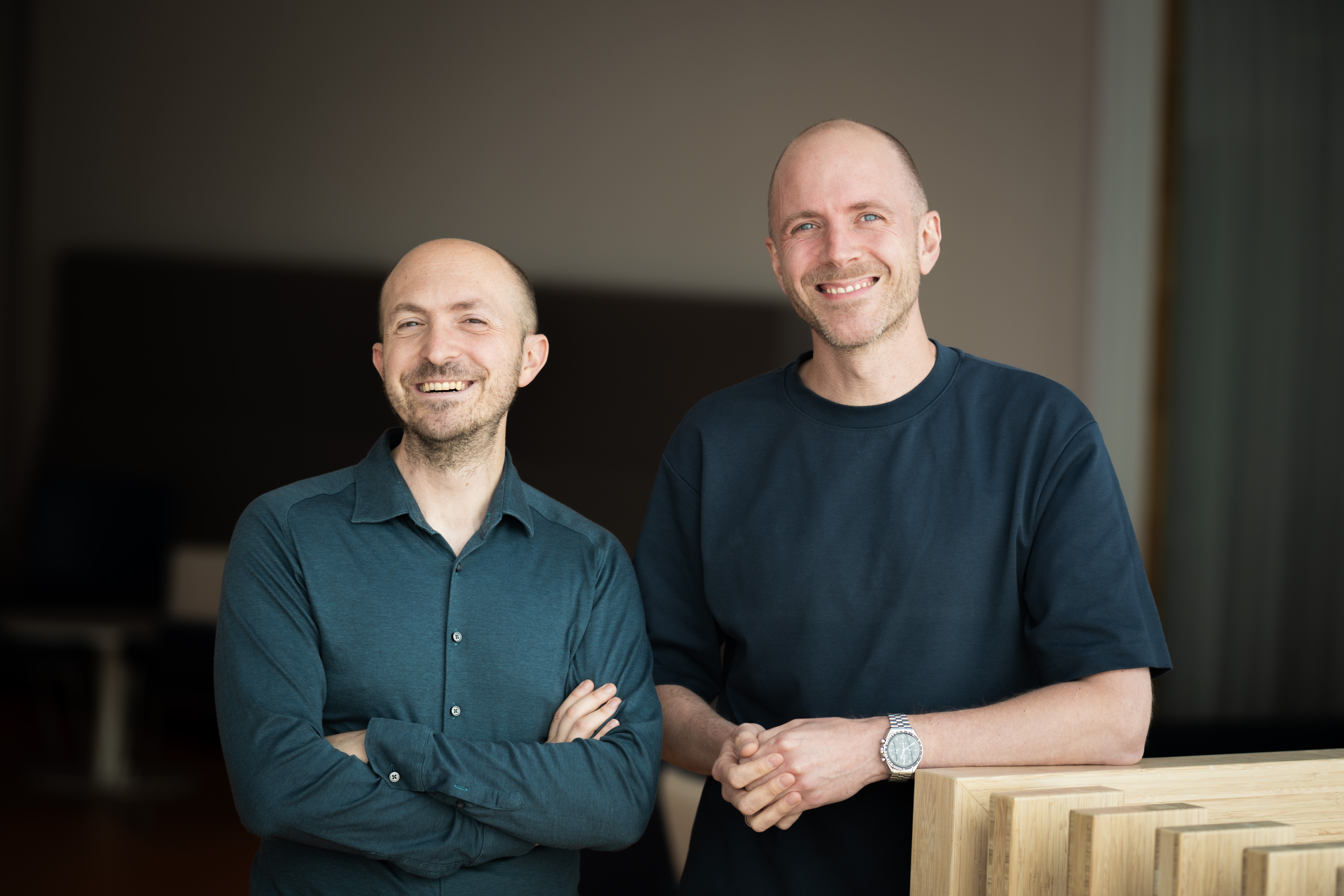
Photo credit: Alisa Potter
Many cancer therapies work by targeting proteins on cancer cells. For example, modern immunotherapies reprogram the patient’s immune system to recognize and attack specific proteins that are present on tumor cells but absent on healthy cells. This is a powerful approach, but it’s key to pick the right target protein, and to make sure that it is truly cancer-specific. If the target protein is also present in healthy tissue, treatments can have serious side effects.
There are several different tools that researchers can use to select a target protein that is specific to cancer. One powerful approach is to map all the proteins present in the healthy human body, and then pinpoint proteins that are present in tumors, but that don’t appear in that map. Scientists have already built detailed maps of which proteins appear where in the healthy adult body, giving drug developers a clear guide. But the biology of children is fundamentally different from that of adults, with proteins switching on and off as their bodies and immune systems develop. And for children, no such map exists – yet.
A Prestigious KWF Grant to Build the First Comprehensive Pediatric Safety Reference
In August 2026, Fabio Marino (Utrecht University Biomolecular Mass Spectrometry and Proteomics, department of Pharmaceutical Sciences, UIPS, Faculty of Science and The Netherlands Proteomics Centre, NPC) and Sebastiaan van Heesch (Princess Máxima Center for pediatric oncology, Oncode Institute) – both experts within Oncode Accelerator’s Therapeutic Vaccines Workstream – were awarded a prestigious KWF (Dutch Cancer Society) grant to tackle this challenge. They will work in collaboration with Ronald de Krijger and Charlotte Sewing, and supported by Simon Venneman, from the Princess Máxima Center for pediatric oncology to build the first comprehensive atlas of proteins and protein fragments in healthy children's tissue.
“Children are not small adults,” explains Sebastiaan van Heesch. “With this atlas, we aim to create a pediatric-specific safety reference that will help bring new therapies to the clinic more quickly and more safely.” This project intersects with previous work from the Van Heesch research group as well as work spearheaded by Fabio Marino in industry settings, which mapped the so-called "Dark Proteome": a whole new class of promising anti-cancer therapeutic targets, hidden in parts of our genetic code previously dismissed as irrelevant. The discovery of the Dark Proteome brings great potential for the design of new cancer therapies, but it also represents an entirely new set of proteins whose presence in healthy children's tissue is unknown. The researchers will include this previously underappreciated sphere of human biology in their atlas.
Sebastiaan van Heesch, Research Group Leader at the Princess Máxima Center and Oncode Institute, co-Lead of Oncode Accelerator Therapeutic Vaccines WorkstreamChildren are not small adults. With this atlas, we aim to create a pediatric-specific safety reference that will help bring new therapies to the clinic more quickly and more safely.
The team will also leverage cutting-edge technologies developed in the group of Fabio Marino to pinpoint the proteins present in healthy pediatric tissue. Lab instrumentation and infrastructure at the Princess Máxima Center and Utrecht University, some of which is co-funded by Oncode Accelerator, will support the work, underlining how investment in shared infrastructure can enable researchers to pursue ambitious and high-impact science.
Fabio Marino, Assistant Professor in Biomolecular Mass Spectrometry and Proteomics, expert in the Oncode Accelerator Therapeutic Vaccines WorkstreamChildren are not small adults. With this atlas, we aim to create a pediatric-specific safety reference that will help bring new therapies to the clinic more quickly and more safely.
Fabio Marino summarizes, “You can't predict what you haven't fully mapped. This atlas builds a more accurate safety map, advancing beyond existing methods to better estimate risk, helping ensure the next generation of pediatric cancer therapies is safe."
About Utrecht University and the department of Pharmaceutical Sciences (UIPS)
Utrecht University was founded in 1636 and located in the heart of the Netherlands, Utrecht University is one of Europe's leading research universities. It is recognized internationally for its high-quality, innovative approach to research and teaching. Utrecht University’s interdisciplinary research targets four themes:
Website: https://www.uu.nl/en/research/life-sciences
The department of Pharmaceutical Sciences (UIPS) focuses on the discovery, development, and use of drugs and medical nutrition, applying molecular and technological principles from the Natural and Life Sciences. Positioned within the Faculty of Science, this research is ideally placed to tackle fundamental scientific questions and translate new findings into solutions for urgent societal and medical needs.
Website: https://www.uu.nl/en/research/utrecht-institute-for-pharmaceutical-sciences-uips
About the Princess Máxima Center for pediatric oncology
When a child is seriously ill with cancer, only one thing comes first: a cure.
That is why at the Princess Máxima Center for pediatric oncology, healthcare professionals and researchers work together every day in a groundbreaking and passionate way to improve the survival rate and quality of life of children with cancer. Now, and in the longer term. Because children still have a whole life ahead of them.
The Princess Máxima Center is a research hospital, the largest pediatric cancer center in Europe. All children with cancer in the Netherlands are treated here. Their mission: To cure every child with cancer, with optimal quality of life. Over 600 researchers and 900 healthcare professionals work closely with Dutch and international hospitals on better treatments and new perspectives on cures.
In the Princess Máxima Center, Utrecht, Netherlands, the best healthcare professionals and scientists work together on a unique mission: to cure every child with cancer, with optimal quality of life. A mission that remains urgent, as one in four children with cancer dies, and many children who do survive experience the effects of radical treatments throughout their lives.
Did you like this article? Subscribe to our newsletter for more like this.
Eiwitten zijn het doelwit van veel nieuwe kankertherapieën. Door in kaart te brengen welke eiwitten aanwezig zijn in gezond kinderweefsel, hopen Fabio Marino en Sebastiaan van Heesch beter te kunnen voorspellen hoe veilig nieuwe behandelingen voor kinderkanker zijn, nog voordat ze bij de patiënt terechtkomen. De twee aan Oncode Accelerator verbonden onderzoekers hebben een prestigieuze KWF-subsidie ontvangen om die kaart te bouwen.
Veel kankertherapieën richten zich op eiwitten op kankercellen. Moderne immuuntherapieën herprogrammeren bijvoorbeeld het immuunsysteem van de patiënt om specifieke eiwitten te herkennen en aan te vallen die wel aanwezig zijn op tumorcellen, maar niet op gezonde cellen. Dit is een krachtige aanpak, maar het is cruciaal om het juiste doelwiteiwit te kiezen en te zorgen dat dit eiwit écht kankerspecifiek is. Als het eiwit ook aanwezig is in gezond weefsel, kunnen behandelingen ernstige bijwerkingen veroorzaken.
Onderzoekers beschikken over verschillende middelen om kankerspecifieke eiwitten te selecteren voor doelgerichte therapie. Een krachtige benadering is om alle eiwitten die aanwezig zijn in het gezonde menselijke lichaam in kaart te brengen, en vervolgens eiwitten te identificeren die wel in tumoren voorkomen maar niet in die referentiekaart. Wetenschappers hebben inmiddels gedetailleerde ‘atlassen’ ontwikkeld van de eiwitten die in verschillende delen van het gezonde volwassen lichaam voorkomen, waardoor geneesmiddelontwikkelaars over een duidelijke leidraad beschikken. Maar de biologie van kinderen verschilt fundamenteel van die van volwassenen. Tijdens de ontwikkeling van hun lichaam en immuunsysteem worden eiwitten voortdurend aan- en uitgeschakeld. Voor kinderen bestaat een dergelijke kaart nog niet, althans nog niet.
Een prestigieuze KWF-subsidie om de eerste uitgebreide pediatrische veiligheidsreferentie te ontwikkelen
In augustus 2026 ontvingen Fabio Marino (Universiteit Utrecht Biomolecular Mass Spectrometry and Proteomics, afdeling Pharmaceutical Sciences, UIPS, Faculteit Bètawetenschappen, The Netherlands Proteomics Centre, NPC) en Sebastiaan van Heesch (Prinses Máxima Centrum voor kinderoncologie, Oncode Institute) – beiden expert binnen de Therapeutic Vaccines Workstream van Oncode Accelerator – een prestigieuze KWF-subsidie om deze uitdaging aan te pakken. Zij werken samen met Ronald de Krijger en Charlotte Sewing, en met ondersteuning van Simon Venneman, van het Prinses Máxima Centrum voor kinderoncologie om de eerste uitgebreide atlas van eiwitten en eiwitfragmenten in gezond kinderweefsel te bouwen.
"Kinderen zijn geen kleine volwassenen," legt Sebastiaan van Heesch uit. "Met deze atlas willen we een veiligheidsreferentie creëren die specifiek is voor kinderen, zodat nieuwe therapieën sneller én veiliger naar de kliniek kunnen worden gebracht." Dit project bouwt voort op eerder werk van de onderzoeksgroep van Van Heesch en op werk dat Fabio Marino in een industriële context heeft geleid, waarin het zogenaamde "Dark Proteome" in kaart werd gebracht: een volledig nieuwe klasse veelbelovende therapeutische doelwitten tegen kanker, verborgen in delen van onze genetische code die vroeger over het hoofd werden gezien. De ontdekking van het Dark Proteome biedt grote kansen voor de ontwikkeling van nieuwe kankertherapieën, maar betekent ook een compleet nieuwe verzameling eiwitten waarvan de aanwezigheid in gezond kinderweefsel onbekend is. De onderzoekers zullen dit tot dusver onderbelichte deel van de menselijke biologie meenemen in hun atlas.
Het team maakt daarnaast gebruik van geavanceerde technologieën ontwikkeld in de groep van Fabio Marino om de eiwitten in gezond kinderweefsel op te sporen. Labapparatuur en -infrastructuur bij het Prinses Máxima Centrum en de Universiteit Utrecht, medegefinancierd door Oncode Accelerator, ondersteunt het werk – een treffend voorbeeld van ambitieus en impactvol onderzoek dankzij investeringen in gedeelde infrastructuur.
Fabio Marino vat het samen: "Je kunt niet beschermen wat je niet in kaart hebt gebracht. Met dit project bouwen we een betere veiligheidsatlas voor kinderen. Daarmee maken we een verbeterslag ten opzichte van de bestaande methodes om het risico van kankertherapieën te voorspellen, en dragen we bij aan de veiligheid van de volgende generatie therapieën voor kinderkanker."
Over Universiteit Utrecht en het Utrecht Institute for Pharmaceutical Sciences (UIPS)
Universiteit Utrecht, opgericht in 1636 en gelegen in het hart van Nederland, is een van Europa's toonaangevende onderzoeksuniversiteiten. Internationaal erkend voor haar hoogwaardige, innovatieve benadering van onderzoek en onderwijs. Het interdisciplinaire onderzoek van de Universiteit Utrecht richt zich op vier thema's:
Website: https://www.uu.nl/en/research/life-sciences
Het Utrecht Institute for Pharmaceutical Sciences (UIPS) richt zich op de ontdekking, ontwikkeling en toepassing van geneesmiddelen en medische voeding. Daarbij worden moleculaire en technologische principes uit de natuur- en levenswetenschappen toegepast. Als onderdeel van de Faculteit Bètawetenschappen bevindt het instituut zich in een ideale positie om fundamentele wetenschappelijke vraagstukken te onderzoeken en nieuwe inzichten te vertalen naar oplossingen voor urgente maatschappelijke en medische uitdagingen.
Website: https://www.uu.nl/en/research/utrecht-institute-for-pharmaceutical-sciences-uips
Over het Prinses Máxima Centrum voor kinderoncologie
Als een kind ernstig ziek is door kanker, staat maar een ding voorop: genezen.
Ieder jaar krijgen zo’n 600 kinderen in Nederland de diagnose kanker. Daarom werken zorgprofessionals en onderzoekers in het Prinses Máxima Centrum voor kinderoncologie elke dag grensverleggend en gepassioneerd samen aan het verbeteren van de overlevingskans, en aan de kwaliteit van leven van kinderen met kanker. Nu, en op de langere termijn. Want kinderen hebben nog een heel leven voor zich.
Het Prinses Máxima Centrum in Utrecht is geen gewoon ziekenhuis, maar een onderzoeksziekenhuis. Alle kinderen met kanker in Nederland worden hier behandeld en al het onderzoek naar kinderkanker vindt hier plaats. Ruim 900 zorgprofessionals en 600 onderzoekers werken nauw samen. Daarmee is het Prinses Máxima Centrum het grootste kinderkankercentrum van Europa. Internationale samenwerking is essentieel om zorg en onderzoek voor kinderen met kanker te blijven verbeteren. Door kennis en data te delen, ontstaan sneller betere behandelingen en nieuwe perspectieven op genezing.
Zo geeft het Máxima het kind van vandaag de allerbeste zorg én zetten we belangrijke stappen om de overlevingskansen voor de kinderen die nu nog niet genezen, te verbeteren. Dit doen ze in Nederland en wereldwijd.
Website: https://www.prinsesmaximacentrum.nl/